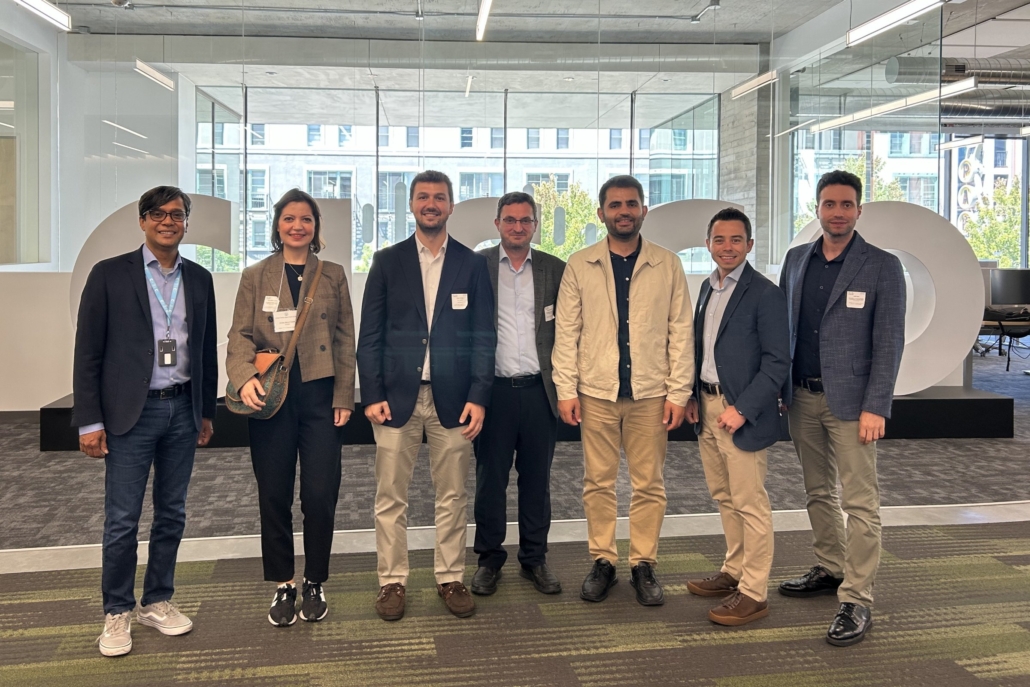
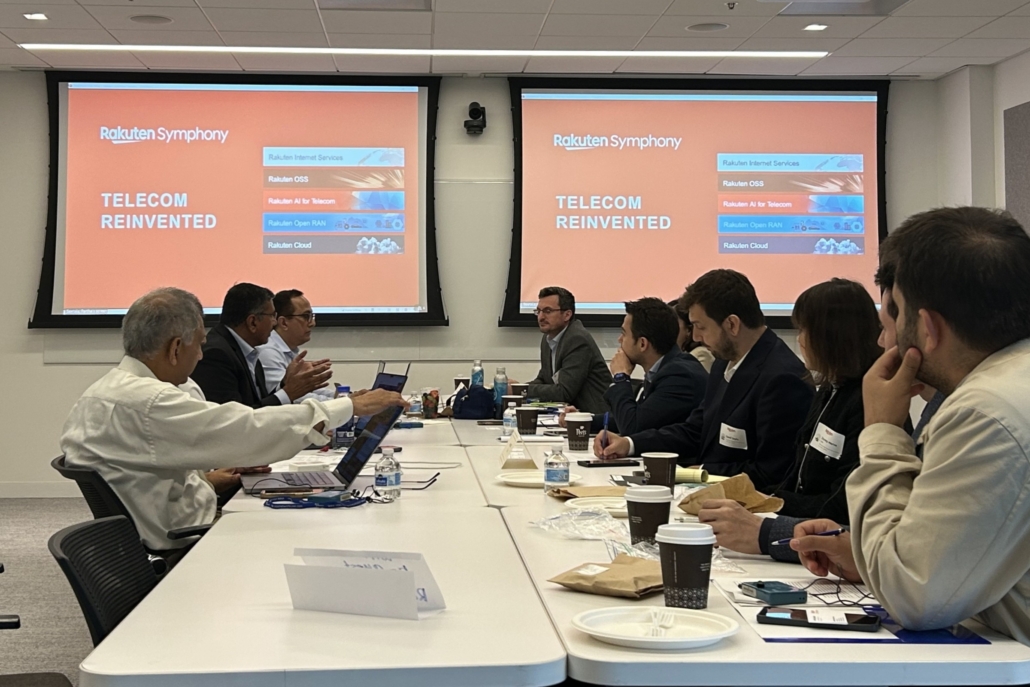
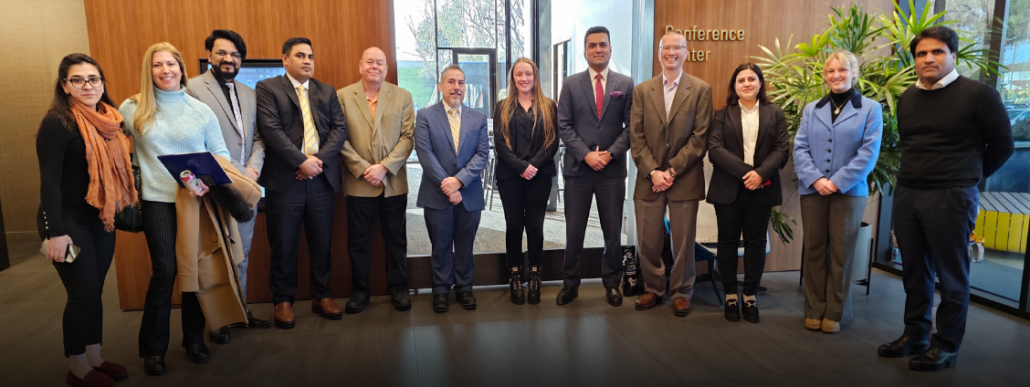
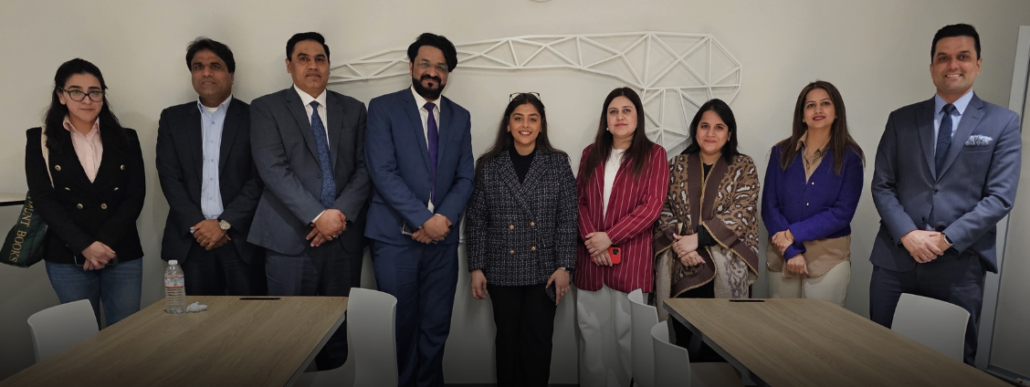
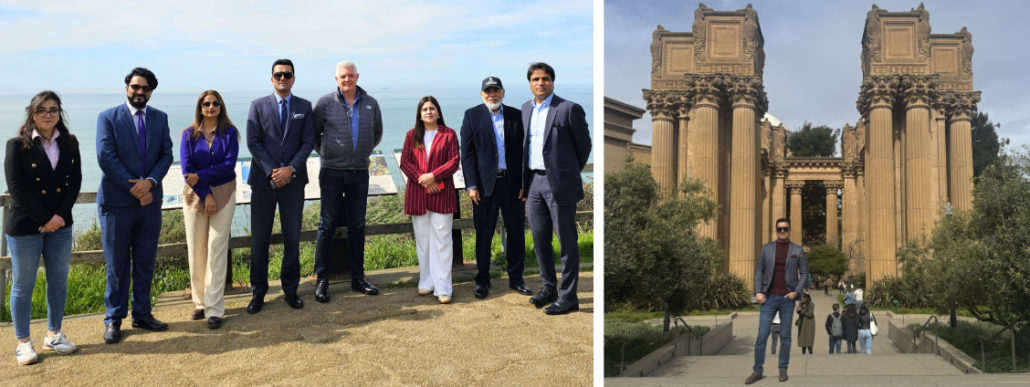
From September 23-27, 2025, Global Ties San Francisco hosted nine senior government officials, policy advisors, researchers, and cybersecurity leaders from Germany and Sweden for a U.S. Department of State International Visitor Leadership Program (IVLP) project on artificial intelligence (AI) policy, innovation and security.
Throughout the program, the participants and their U.S. interlocutors were united by expertise in AI and digital governance, cybersecurity, and the responsible use of data and emerging technologies to strengthen democratic institutions, public sector innovation, and resilience against malign influence. Building on this shared foundation, the program strengthened transatlantic collaboration on a responsible and innovative AI ecosystem by examining U.S. approaches to innovation and risk-based regulation and aligning strategies for secure digital infrastructure.
Starting in Washington, DC, the group traveled to Minneapolis, Phoenix, and Sacramento, engaging with local leaders and innovators to examine how these issues vary across the nation. The program concluded in the San Francisco Bay Area, the world’s premier hub for innovation, where participants focused on the region’s startup ecosystem and its role in advancing next-generation AI systems. Our local city stop also highlighted the development of sustainable and ethical AI models, human-centered design practices, and strategies for fostering economic growth through early-stage investment.
Key Conversations
World Economic Forum – Centre for the Fourth Industrial Revolution (C4IR)
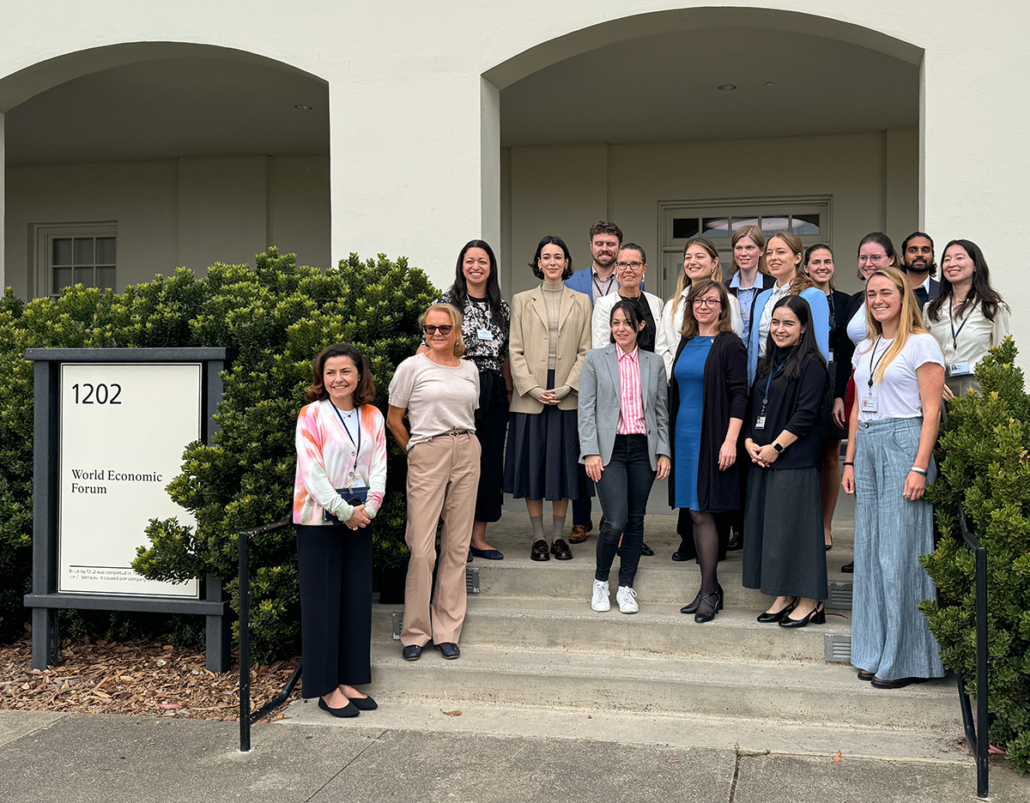
Under the fog-shrouded Golden Gate Bridge, the group met with the World Economic Forum’s (WEF) Centre for the Fourth Industrial Revolution (C4IR), a platform for “multistakeholder dialogue and concrete cooperation on governance challenges and opportunities presented by advanced technologies.” Here, WEF stays closely connected to the Bay Area’s influential ecosystem of startups, investors, and tech giants that steer the global economy’s most important innovations and decisions. Meeting with AI and data governance leaders, the visitors examined how C4IR advances public-private cooperation on emerging technologies such as the Internet of Things (IoT), AI, and blockchain, with a focus on developing policy frameworks that enable responsible and widespread use. They outlined key WEF initiatives such as those focused on AI agents and AGI, offering insights the visitors could bring back with them from a region that has long set the pace in cutting-edge technology.
Plug and Play Tech Center
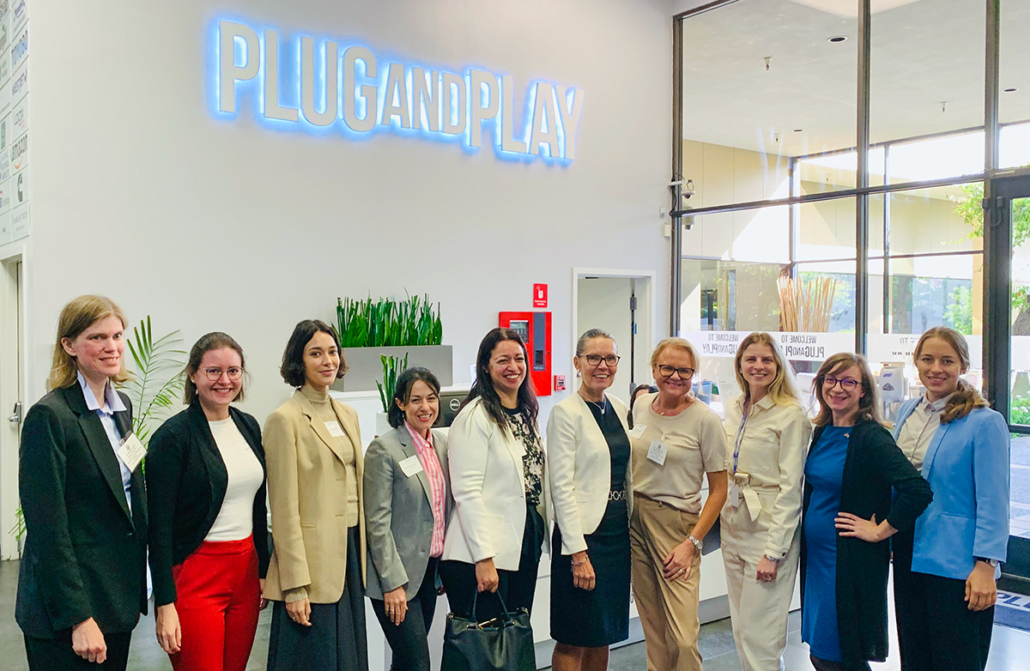
At the entrance to Plug and Play Tech Center, a large Persian carpet — a nod to the founders’ beginnings — set the stage for the group’s second meeting of the day. The delegation toured the tech center, examining its origin story and mission as a leading Silicon Valley startup accelerator and corporate innovation platform that connects tech-focused startups with global corporations, investors, and public sector partners. The visitors also met with enterprise and AI ventures leaders to discuss the dynamics of the Silicon Valley startup landscape, and how Plug and Play helps startups scale by facilitating strategic connections, mentorship, and investment. The conversation touched on access to venture capital, mentorship networks, and the key factors that influence startup growth in one of the world’s most competitive markets.
Stanford University – Institute for Human-Centered Artificial Intelligence (HAI)
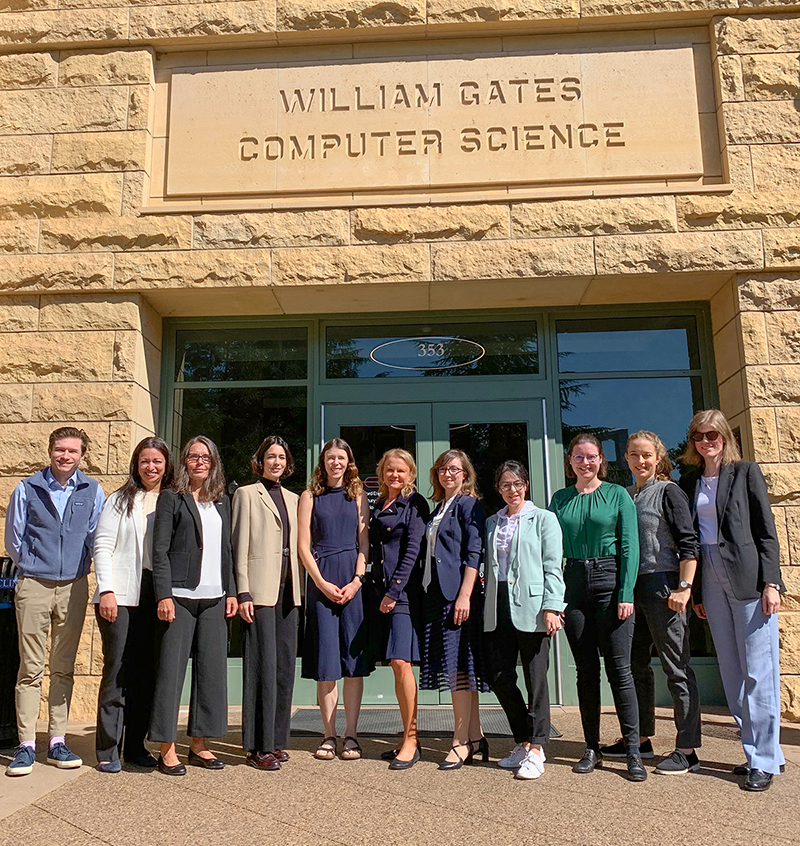
The delegation started the next morning at Stanford University’s Institute for Human-Centered Artificial Intelligence (HAI), a global leader in interdisciplinary research focused on ensuring that AI is developed and used in ways that benefit humanity. Grounded in the belief that AI should be collaborative, augmentative, and aligned with human values, HAI explores the societal impact of AI across three core areas: human impact, augment human capabilities, and intelligence. A discussion on HAI’s vision for the future allowed the visitors to examine how artificial intelligence interacts with individuals and key institutions, and to reflect on policy and governance strategies that support responsible and human-centered AI development.
500 Global
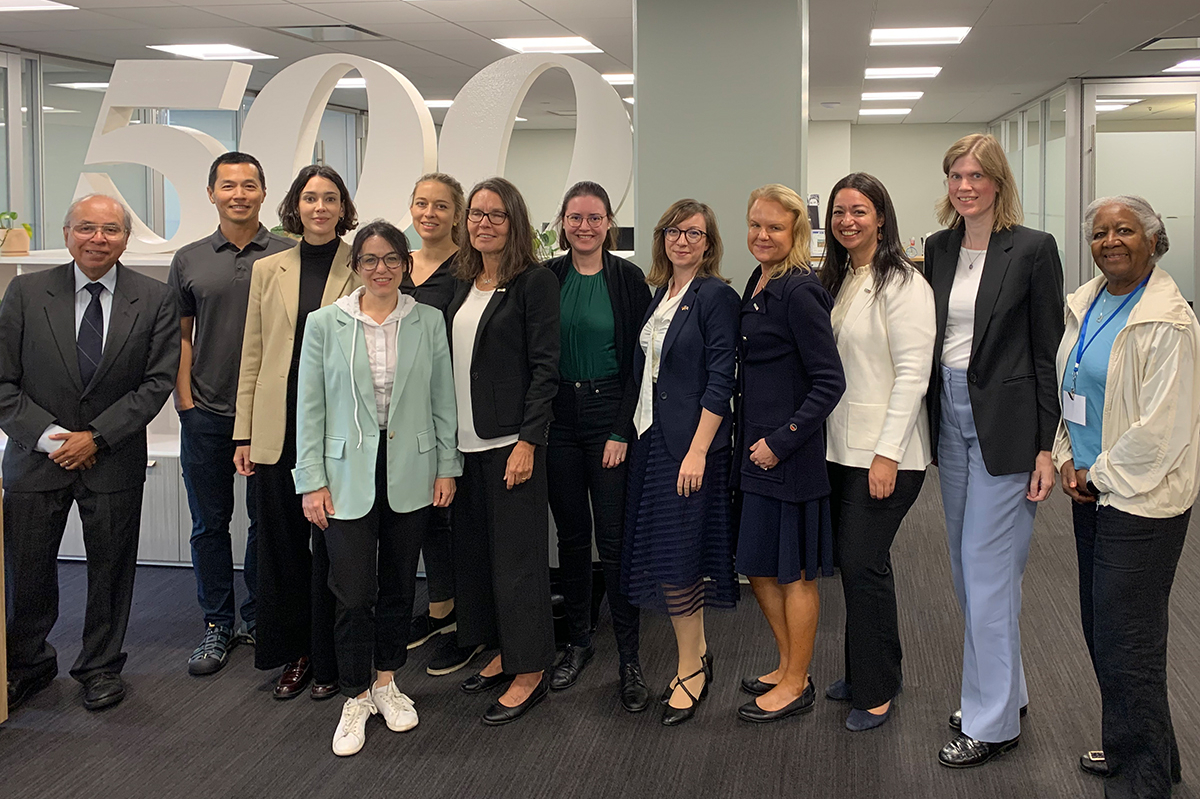
The group rounded out the Silicon Valley tour at 500 Global, which backs founders of high-growth technology companies around the world and helps startups scale. Here, discussion centered on how 500 Global cultivates startup ecosystems, drives AI-enabled innovation, and fosters cross-border collaboration among entrepreneurs, investors, and policymakers.
Tying it All Together: Facilitated Synthesis Session
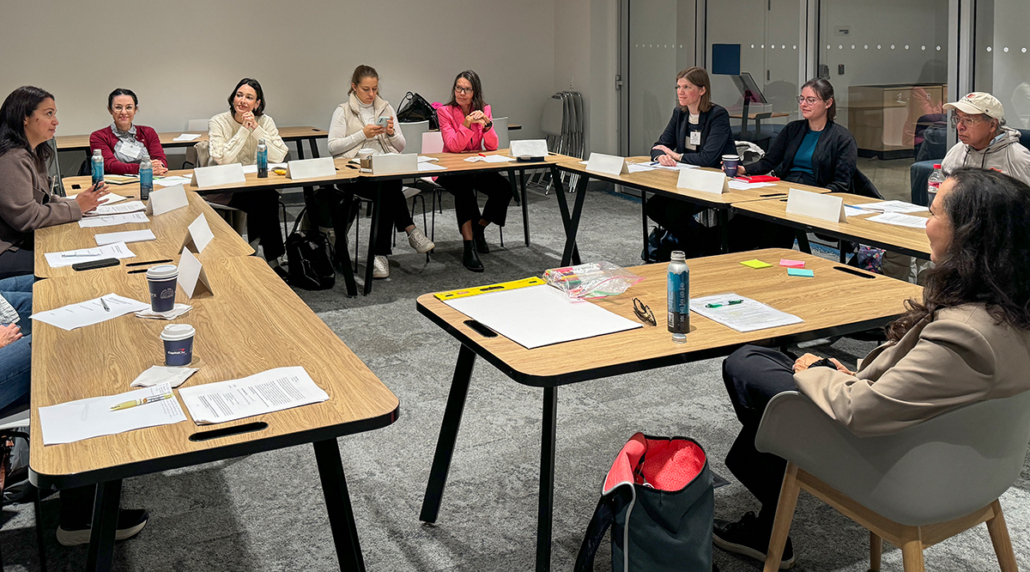
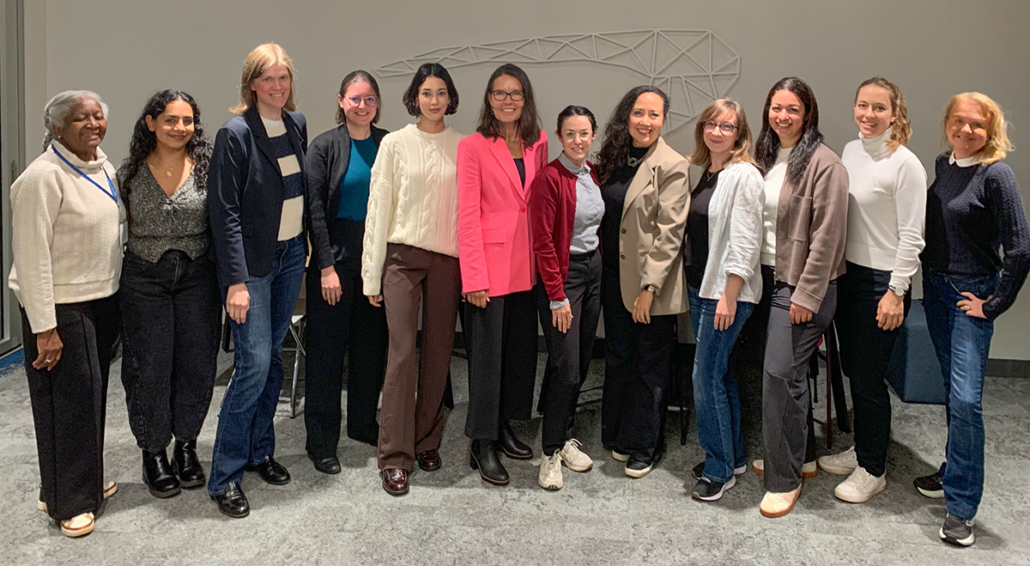
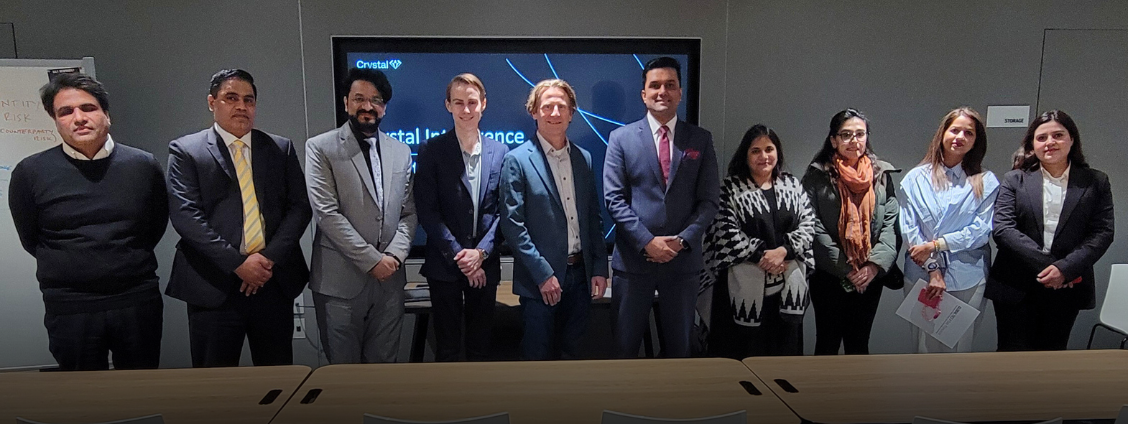
We also incorporated one of our signature offerings: a Reflection and Synthesis Session led by an award-winning commercial attorney, mediator, and facilitator, as well as a non-profit leader, entrepreneur, and change agent, with a strong focus on responsible AI. The session provided structured time for participants to reflect on their three-week IVLP experience, distill key insights, and map out concrete next steps.
Through facilitated exercises, the visitors identified and shared core takeaways from the project, explored how U.S. approaches and best practices could be adapted to their own professional contexts, and assessed related challenges and opportunities. The session concluded with dedicated time for participants to begin outlining actionable plans to implement upon their return home.
Exploring the Bay Area Beyond AI
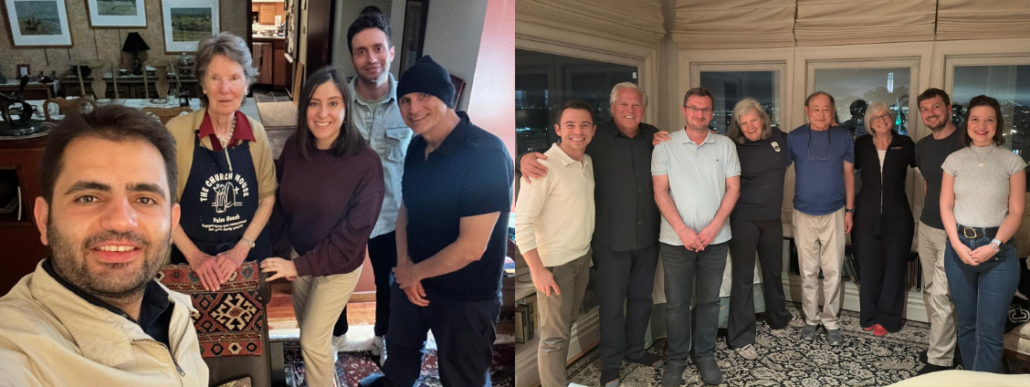
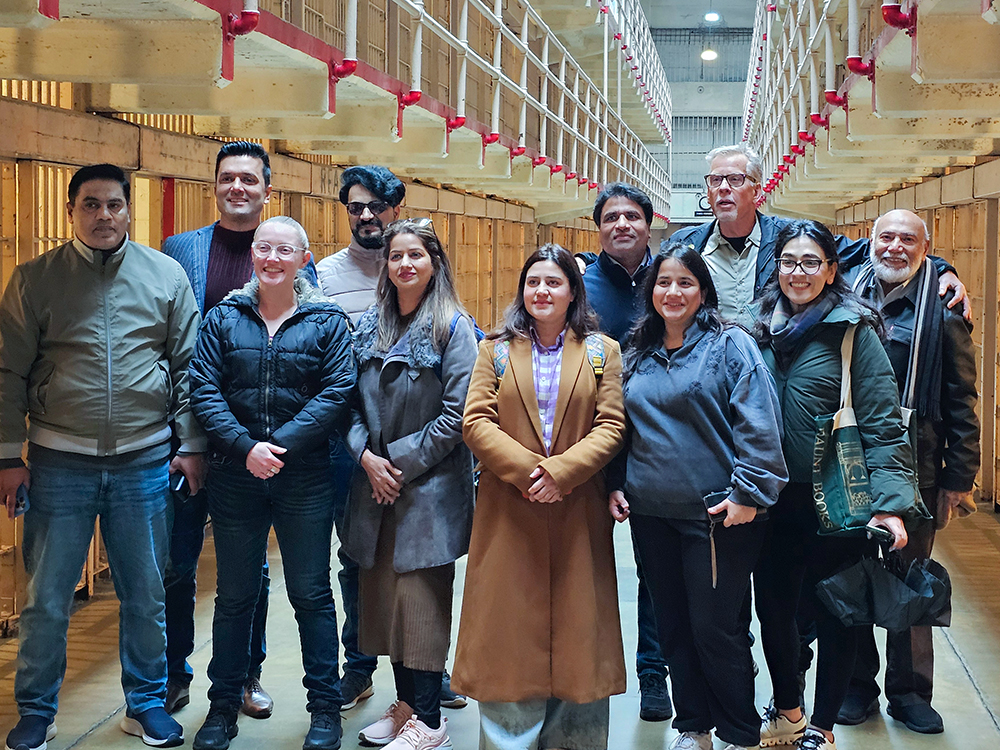
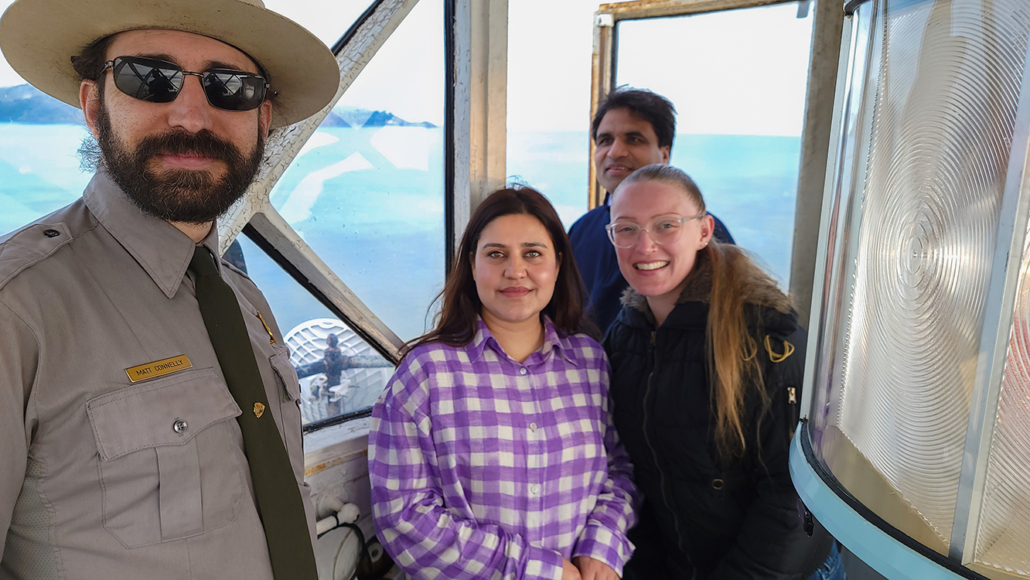
With days fluctuating between classic San Francisco fog and sunny afternoons with crystal-clear views of the Golden Gate Bridge, the visitors thoroughly enjoyed their free time. They explored Fisherman’s Wharf, took a Bay cruise, attended a hockey game, and had lunch in the charming waterfront town of Sausalito.



Final Reflections
By demonstrating the U.S. approach toward innovation and AI legislation, this project sought to leverage AI’s promise in both Germany and the United States while also addressing possible dangers. In reflecting on their journey, delegates recognized that each encounter revealed not just how the U.S. leads in innovation, but how that leadership thrives through openness, collaboration, and the courage to experiment. The experience inspired them to translate those lessons into their own national contexts, strengthening transatlantic ties, and shaping a more connected, human-centered approach to AI and technology.
Authors: Giovanna Basso & Alannah Crandall