
Join Global Ties San Francisco and our international guests on September 24th for a free community social hour and networking event with meaningful conversations over delicious food!
Posts
Global Ties San Francisco hosted a U.S. Department of State International Visitor Leadership Program (IVLP) delegation of eight Japanese innovation leaders from academia, technology, and industry from July 28–30, 2026 to explore economic development initiatives and related themes. A key regional focus was the Bay Area’s startup culture, how it differs from Japan’s, and how local organizations foster innovation and facilitate economic cooperation between the United States and Japan.
As a global technology and venture capital hub, the San Francisco Bay Area provided an ideal setting for the delegates to compare American and Japanese approaches to entrepreneurship and venture capital and consider ideas they could apply in their work in Japan. The delegation’s meetings ranged from nonprofits and venture capital firms to accelerators and government-supported programs, providing a range of perspectives on the vast ecosystem that ensures Silicon Valley’s continued innovation and growth.
While the professional program was the primary focus, the delegation was also able to enjoy the rich history and culture of the San Francisco Bay Area. From cruising along the Bay and exploring the towering redwoods of Muir Woods to visiting Meta Lab, Apple Park, and the Google Visitor Experience, the visitors experienced the dynamism and natural beauty that define the region.
Day 1: An Introduction to Bay Area-Japan Ties and a Visit to the Heart of Silicon Valley
Japan Society of Northern California
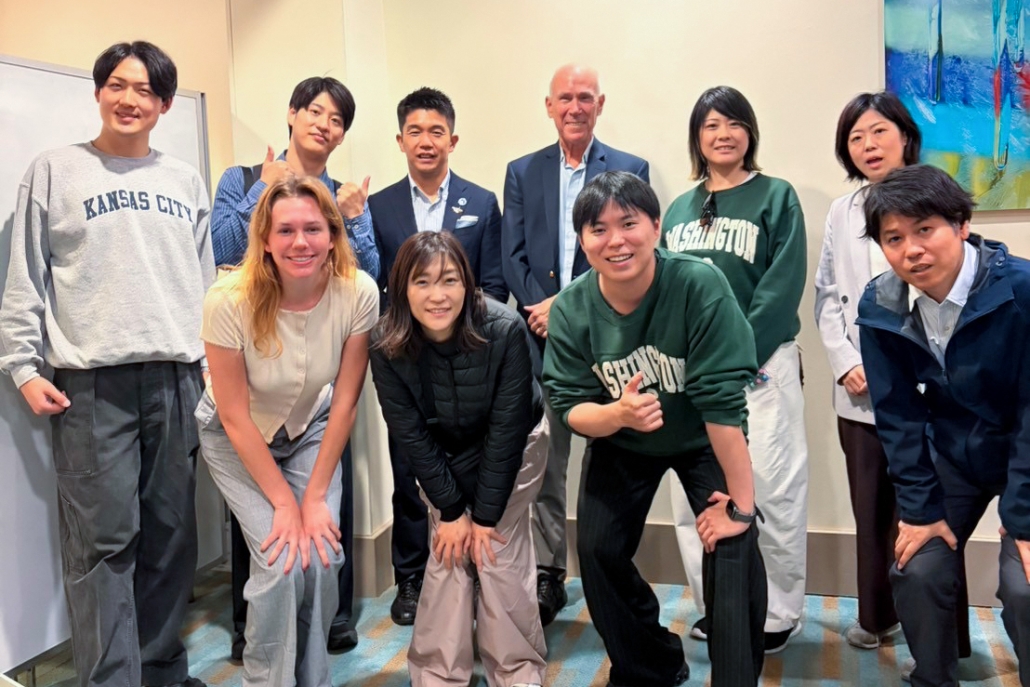
To kick off their stay, the visitors met with Japan Society of Northern California (JSNC), a nonprofit that has spent decades strengthening cultural and economic ties between the Bay Area and Japan. The discussion introduced the delegation to the longstanding connections between Silicon Valley and Japan and explored how those relationships continue to deepen.
Drawing on years of professional experience in Japan, the speaker offered insights into the evolution of economic cooperation between the two regions and how JSNC works to strengthen these connections. One example was JSNC’s annual symposium, which brings five Japanese startups to the Bay Area to present their work and connect with venture capitalists and other local founders.
Along the Peninsula
Following their brief introduction to Silicon Valley, the delegation traveled south down the Peninsula to several technology experience centers. The first stop was Meta Lab Burlingame, where the visitors had the opportunity to try the company’s smart glasses and explore immersive demos and limited-edition items.
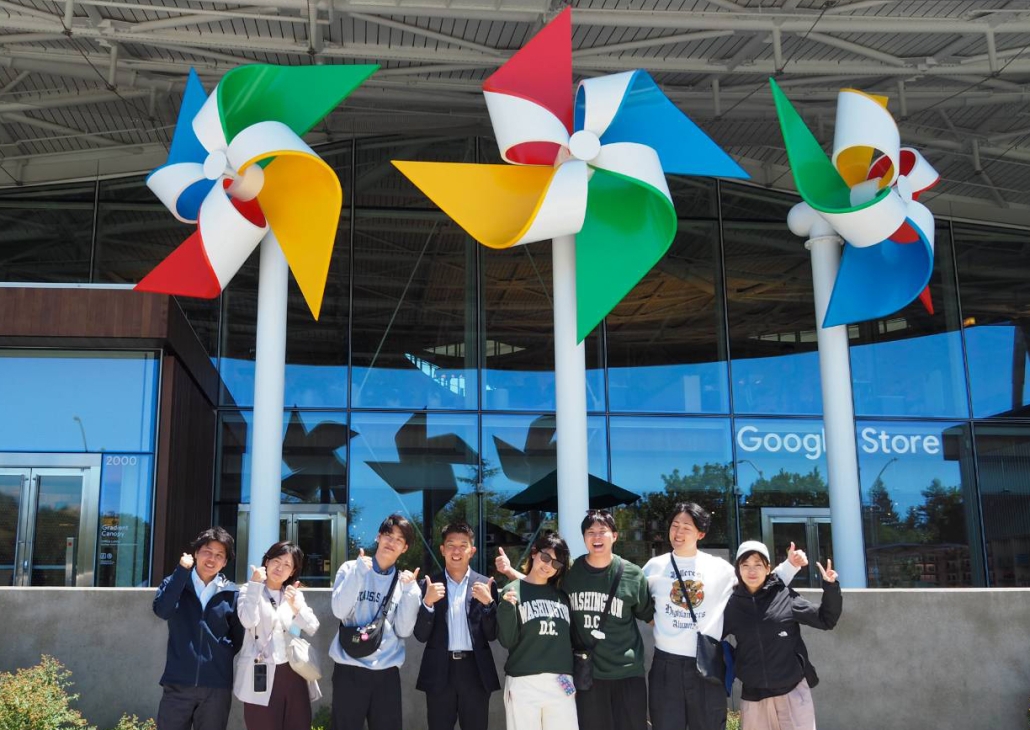
The group then continued to the heart of Silicon Valley, visiting Apple Park Visitor Center. In addition to taking in the striking exterior of the store, they explored Apple’s latest technologies and exclusive merchandise. The visitors concluded their Peninsula tour with lunch at the Google Visitor Experience, where they enjoyed sandwiches from the café and explored the interactive exhibits.
Global Hands-On Venture Capital
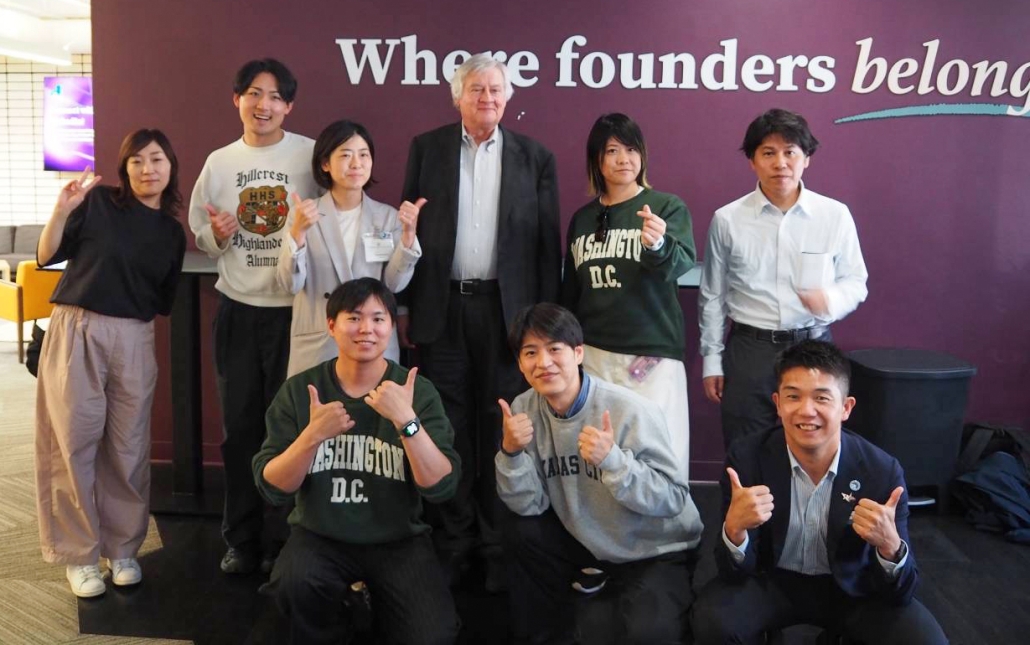
After lunch, the delegation met with a founding partner at Global Hands-On Venture Capital (GHOVC), a firm focused on helping Japanese technology startups expand internationally. The speaker shared examples of companies in GHOVC’s portfolio and explained the factors the firm considers when making investment decisions.
The conversation also highlighted differences between startup culture in Japan and Silicon Valley, including the latter’s greater emphasis on ambitious goals and willingness to take risks. The speaker referenced research indicating that people in the United States who were not entrepreneurs were more likely to associate entrepreneurship with opportunity and personal capability, while respondents in Japan were more likely to associate it with a fear of failure. The comparison offered a useful framework for considering how social and cultural attitudes toward entrepreneurship can influence startup ecosystems.
Day 2: Accelerators, Incubators, and an Afternoon on the Bay
US Market Access Center
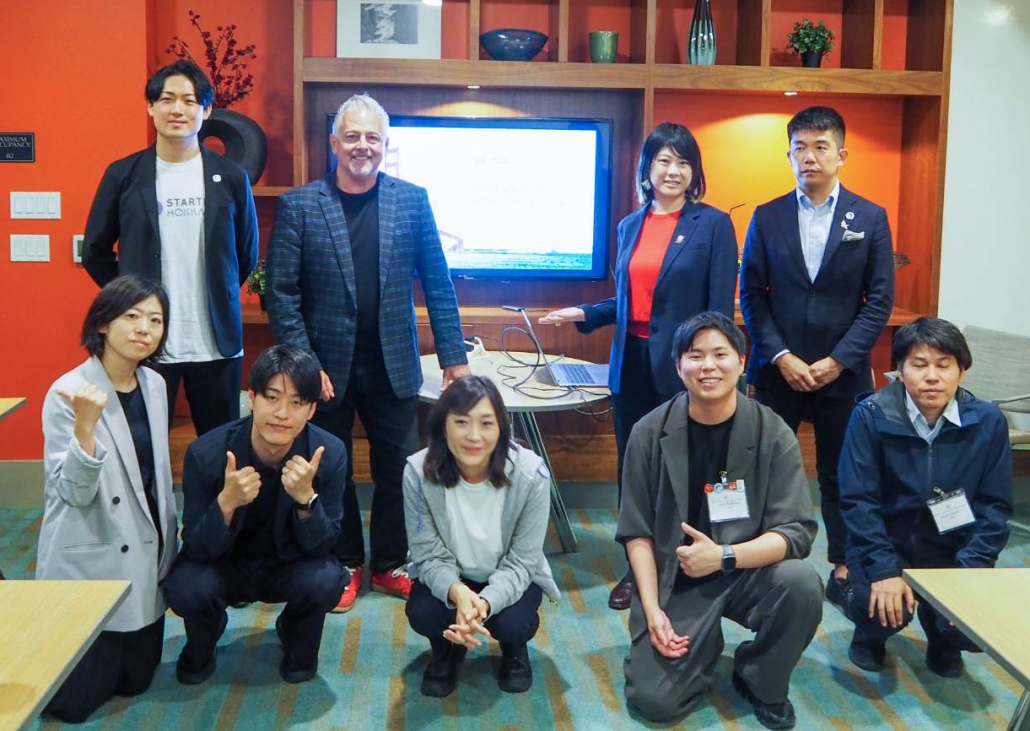
The second day began with the US Market Access Center (USMAC), exploring its accelerator model and efforts to help international companies enter the U.S. market. Through mentorship, market-entry strategies, and introductions to investors and other business leaders, USMAC helps companies navigate the challenges of establishing themselves in a new market.
The conversation also explored why Silicon Valley remains a major hub for startups in an increasingly globalized and interconnected economy. While digital communication has made it easier than ever to connect across borders, the speaker emphasized the continued value of face-to-face interactions among founders, investors, and business leaders. These relationships can create opportunities for collaboration and demonstrate how networking can generate mutual benefits across markets.
Scrum Studio
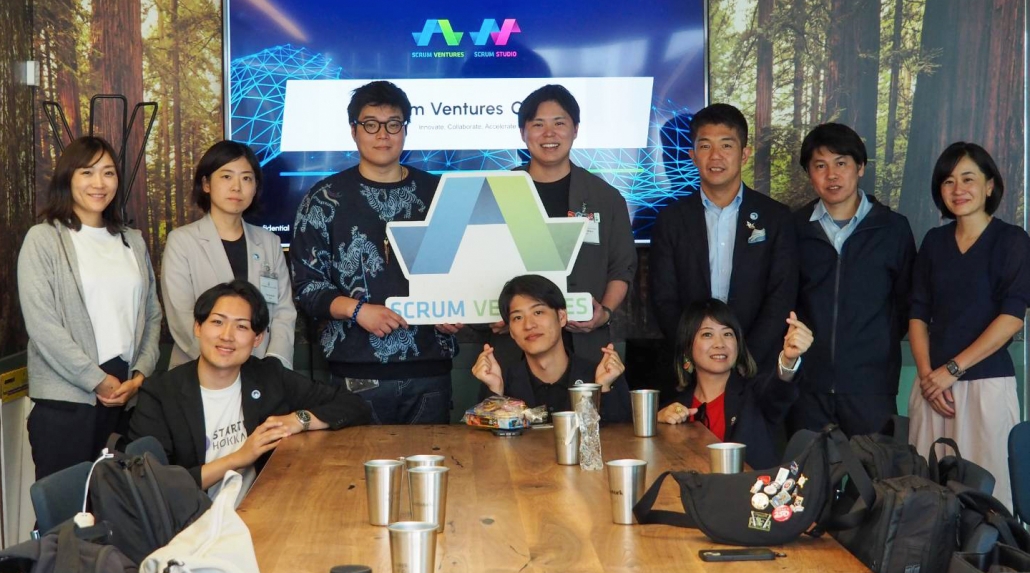
After lunch at the bustling San Francisco Ferry Building, where several delegates sampled the City’s famous sourdough, the group met with Scrum Ventures to learn about Scrum Studio, the firm’s incubator arm. Founded by an entrepreneur who grew up in Japan, Scrum Ventures maintains headquarters in San Francisco and Tokyo and has made significant investments in Japanese companies, giving the firm a distinctive understanding of both markets.
The discussion centered on Scrum Studio’s startup mentorship program, through which the firm selects five startups from more than 300 applicants. The selected companies receive mentorship and introductions to potential partners in Japan.
One example highlighted was the Hokkaido Nippon-Ham Fighters, a professional baseball team in Nippon Professional Baseball (NPB). Scrum Studio is working with startups whose innovations can contribute to the new stadium and village being developed for the team, while also supporting economic development efforts in Hokkaido.
The meeting was a home run, rounding out earlier sessions with a fresh perspective: while many of the delegation’s other meetings focused on initiatives in the United States, Scrum demonstrated how U.S. approaches to entrepreneurship and innovation can be applied within Japan itself.
Red and White Fleet’s Bridge to Bridge Cruise
Following the meeting, the delegation took Waymo rides to Fisherman’s Wharf to begin a quintessential San Francisco experience: a cruise on the Bay.
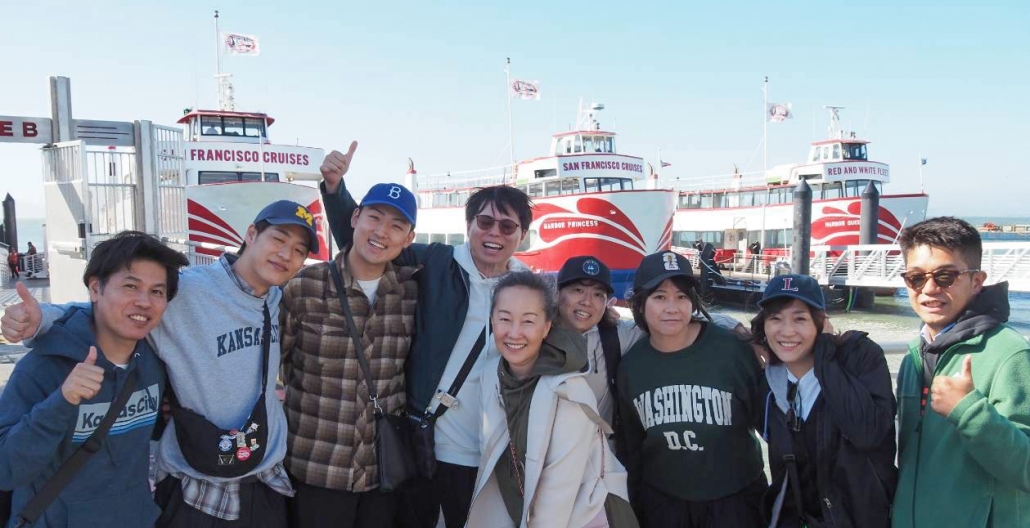
On an unusually clear day, the group enjoyed picturesque views of the Golden Gate Bridge, Bay Bridge, San Francisco skyline, and Alcatraz Island. But while the weather did its part to make the afternoon memorable, the Bay’s choppy waters were determined not to be outshined. The cruise offered an unexpected moment of levity when a few riders—including a Global Ties San Francisco intern—were suddenly soaked by the lapping waves, prompting immediate laughter from all. Afterward, the visitors spent the evening exploring the wharf and shopping for souvenirs.
Day 3: Two Approaches to Startup Growth
Japan External Trade Organization
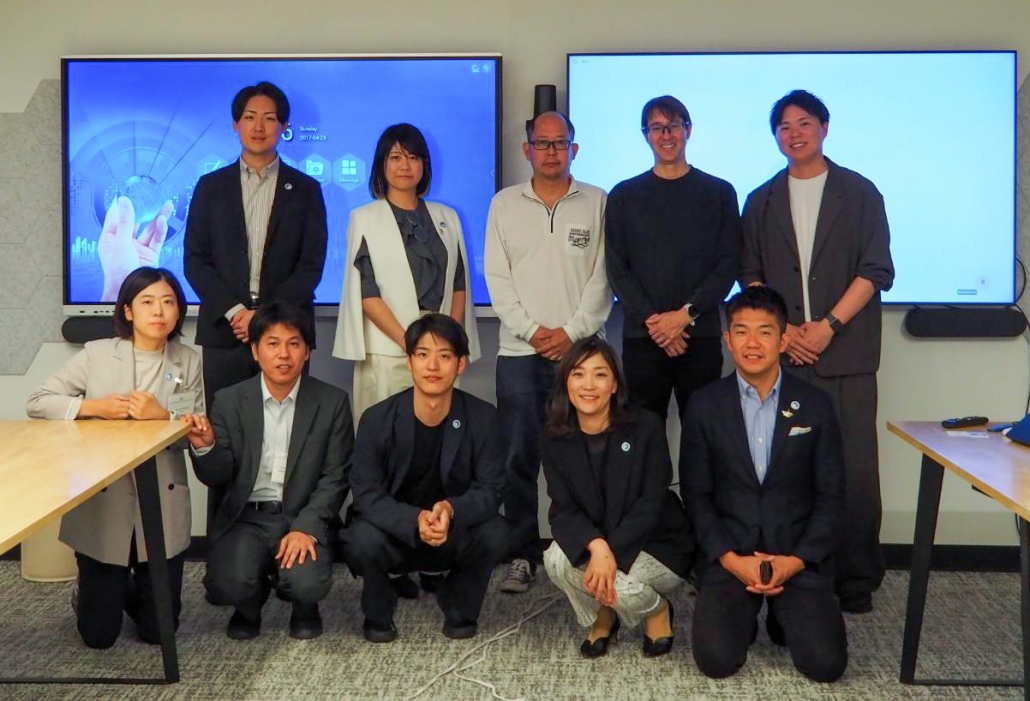
The following morning, the delegation met with representatives of the Japan External Trade Organization (JETRO). While earlier meetings focused primarily on private sector companies in the regional tech ecosystem, JETRO demonstrated government support to promote startup investment and business development between Japan and the United States. The discussion demonstrated how a public sector organization can complement the work of private investors, accelerators, and other organizations by helping Japanese companies identify opportunities, build connections, and navigate the U.S. market.
Plug and Play Tech Center
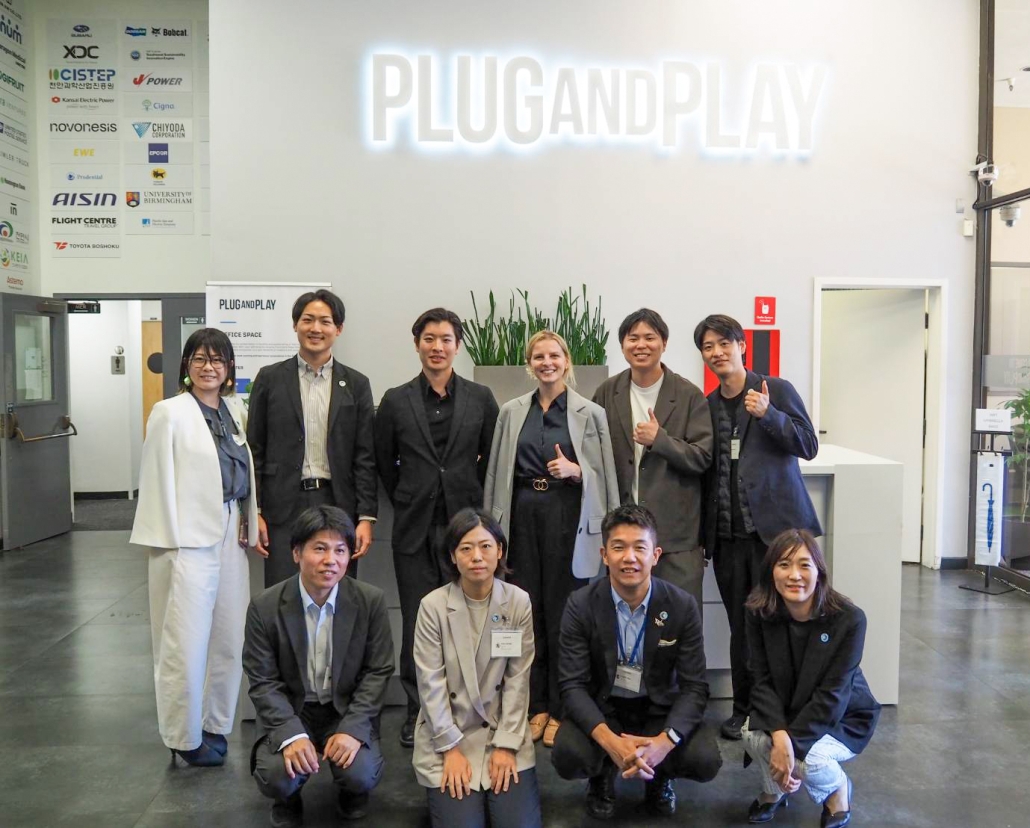
After lunch in Sunnyvale, the delegates continued on to Plug and Play to examine how accelerators and corporate innovation models support early-stage business growth, investment, and commercialization. The visitors toured the facility, including its collaborative workspace where startups work alongside one another, and learned more about what Plug and Play looks for in potential investments. The delegation also heard about some of Plug and Play’s early investments, including PayPal, and viewed the wall of signatures from successful Silicon Valley technology company partners and program participants, among others.
Day 4: A Final Goodbye to the United States
Synthesis Session
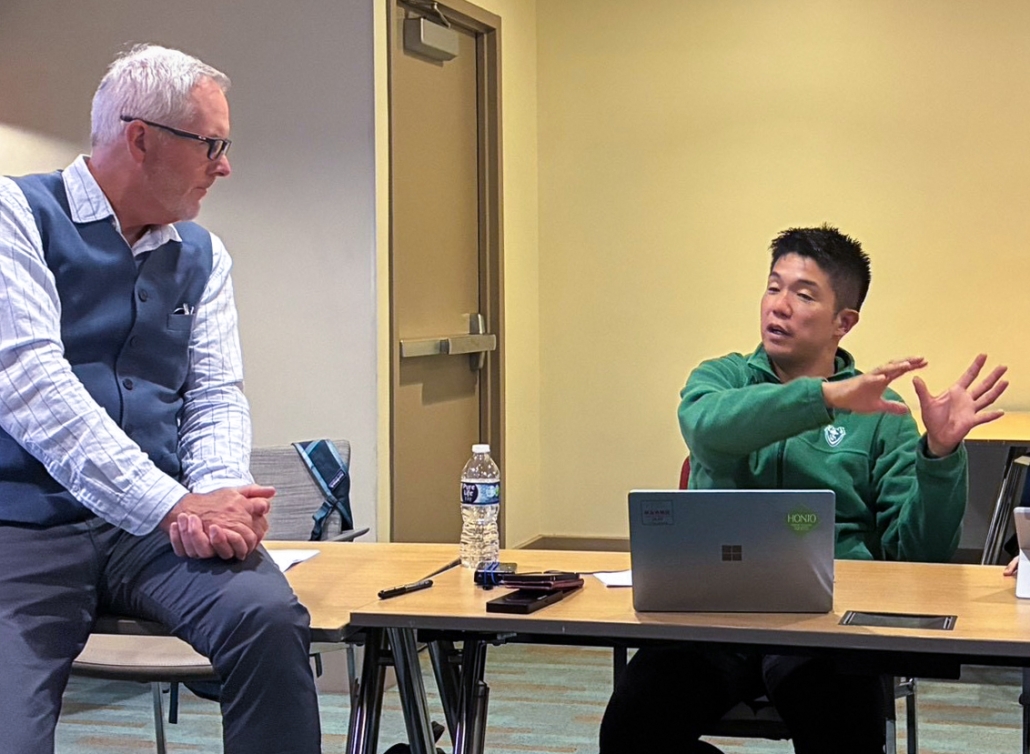
As the visitors concluded their three-week program, they participated in a facilitated synthesis session to reflect on their experiences and identify lessons learned from their time in the U.S. The delegates compared takeaways not only from San Francisco but also from their previous stops in Washington, DC, Detroit, and Kansas City. The discussion focused on how approaches to entrepreneurship and economic development observed throughout the program could be adapted to the Japanese context.
Golden Gate Bridge and Muir Woods
After several busy days of professional meetings, the delegation took time to relax and explore some of the region’s most iconic destinations before their flight home. At the Golden Gate Bridge, the visitors took photographs and admired one of San Francisco’s most enduring landmarks before continuing to Muir Woods National Monument.
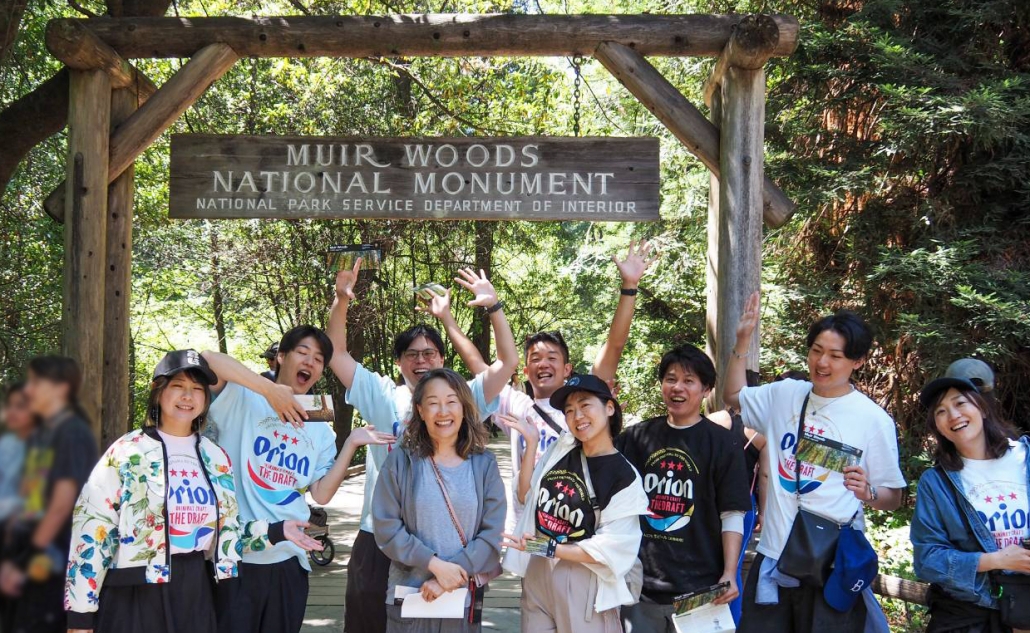
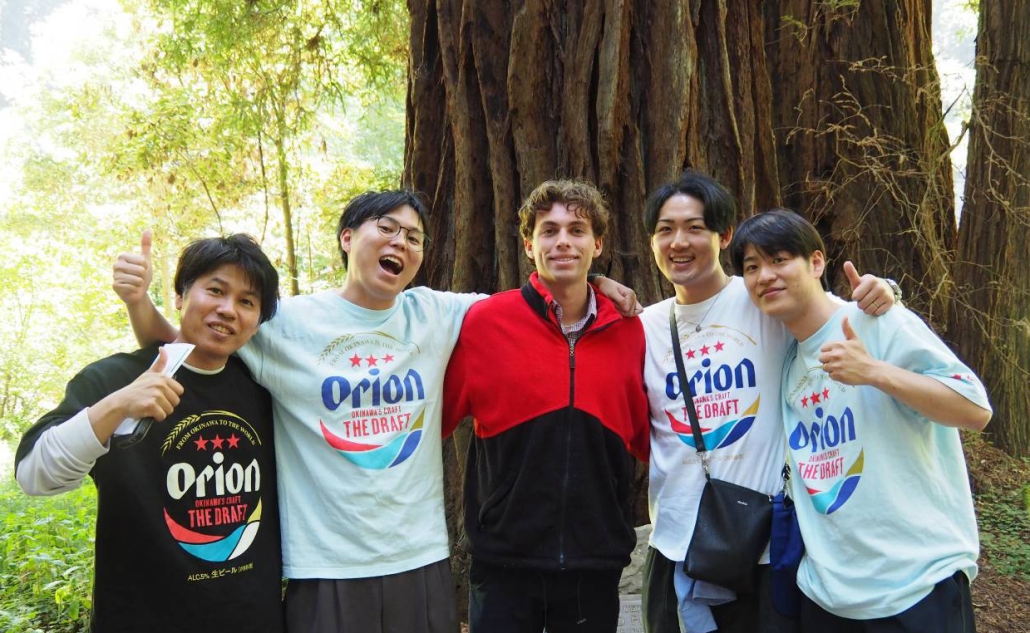
Muir Woods, named after conservationist John Muir, is renowned for its towering old-growth coastal redwoods. Walking among the trees together in their matching t-shirts, the delegation reflected the camaraderie that had developed over their three weeks in the United States. Although their time together was coming to an end, the relationships forged through the IVLP provide a lasting foundation for continued engagement with those they met and each other.
Conclusion
Across several days of meetings with venture capital firms, accelerators, trade organizations, and nonprofits, the visitors experienced the dynamism of Silicon Valley and explored why founders from around the world continue to come to the Bay Area in search of funding, mentorship, and connections.
As one interlocutor put it:
What sets Silicon Valley apart from any other technology hub is its unique cultural willingness to dream big and back moonshots that few others would take a chance on.
That appetite for risk, combined with the region’s concentration of venture capital, continues to draw in innovators worldwide.
Some of the most valuable conversations focused on the experience of operating between the Japanese and U.S. markets, offering insight into the opportunities and challenges of navigating both systems and the importance of mentorship tailored to Japanese startups. Ultimately, the visit demonstrated that the relationship between Japan and Silicon Valley is a dynamic and ongoing two-way exchange of ideas, expertise, and approaches to innovation.
Author: A. B., Summer 2026 Intern
Editor: Alannah Crandall
International Visitor Leadership Program (IVLP)
- Foreign Policy, Economic Security, and China | Europe (19 visitors) – March 27 – April 1
- Countries represented: Azerbaijan, Belgium, Bulgaria, Croatia, Estonia, Finland, Hungary, Italy, Luxembourg, Montenegro, Netherlands, Poland, Republic of North Macedonia, Serbia, Slovakia, Spain, United Kingdom
- Young Parliamentarians: Strategies for Legislative Success | Pakistan (3 visitors) – April 3-5
- An Open, Reliable, and Secure Digital Economy | Brazil (5 visitors) – April 9-14
- Combating Drug Trafficking | India (3 visitors) – April 10-11
- Emerging Technologies Commercialization and Innovation | Uzbekistan (7 visitors) – April 14-18
- Advancing an Open and Secure Digital Economy II | Multi-Regional (19 visitors) – April 22-25
- Countries represented: Argentina, Bangladesh, Canada, Japan, Kenya, Maldives, Nepal, Pakistan, Philippines, Poland, Samoa, Singapore, South Africa, Spain, Sri Lanka, Thailand, Tonga, Uganda, Zimbabwe
- U.S. Approaches to Advancing AI Education | Estonia (10 visitors) – April 26-30
- Edward R. Murrow Program for Journalists: AI and Technology in Journalism | Europe (6 visitors) – May 2-6
- Countries represented: Croatia, Italy, Moldova, Poland, Türkiye, Ukraine
- AI Innovation and Security | Multi-Regional (5 visitors) – June 26 – July 1
- Countries represented: Belarus, Bolivia, Burundi, Italy, Kuwait
- Cooperation for Economic Growth | Japan (8 visitors) – July 27 – August 1
- Artificial Intelligence: Safe, Secure, and Competitive Innovation | Brazil (9 visitors) – July 29 – August 1
- AI and Technology in the Media Landscape | Africa (14 visitors) – August 18-22
- Countries represented: Algeria, Central African Republic, Ghana, Mauritius, Rwanda, São Tomé and Príncipe, South Africa, Tunisia
- Pax Silica: Cooperation in AI and Technology Supply Chains | Multi-Regional (15 visitors) – August 18-22
- Countries represented: Australia, Costa Rica, European Union, Finland, Greece, India, Netherlands, Organisation for Economic Co-operation and Development (OECD), Panama, Philippines, Republic of Korea, Sweden, Taiwan, United Arab Emirates, United Kingdom
- Driving Mutually Beneficial U.S.-India Collaboration on AI | India (4 visitors) – September 23-28
Interested in becoming a Professional Resource or Home Hospitality host for our international visitors?
Last Updated: August 31, 2026
Artificial intelligence (AI) is transforming economies, labor markets, and societies worldwide, prompting important conversations about the future. As the local implementing partner of the U.S. Department of State’s International Visitor Leadership Program (IVLP), Global Ties San Francisco hosted five technology leaders from Belarus, Bolivia, Burundi, Italy, and Kuwait in June 2026 to explore AI innovation and security in the San Francisco Bay Area.
Over two days of professional meetings, delegates met with public sector, industry, community college, and workforce strategy leaders to exchange ideas on responsible AI development, AI security, predictive AI systems, and the future of intelligence. Complementing this, two days of cultural and community engagement showcased everyday American life and fostered personal connections between visitors and locals.
The San Francisco Bay Area provided an ideal setting for this exchange as a global center for AI innovation, technology entrepreneurship, and venture-driven economic growth. Home to Silicon Valley, internationally recognized universities, thousands of startups, and robust cross-sector support systems, the region demonstrates how research, capital, talent, and collaboration advance growth and competitiveness. Through discussions with startups, technology accelerators, industry conveners, government coalitions, and vocational administrators, delegates gained firsthand insight into the region’s culture of rapid innovation and the mechanisms that enable it while maintaining safety and security.
Exploring San Francisco through Culture and Community
To begin the program, the delegation participated in a series of cultural experiences designed to introduce the history of San Francisco, deepen their understanding of U.S. culture, and foster meaningful connections with the local community. The group embarked on a Golden Gate Bay Cruise with Red and White Fleet, exploring the Bay while learning about the region’s rich maritime history and its role in America’s economic growth and spirit of innovation.
The delegation also took part in Home Hospitality dinners, where local families welcomed participants into their homes for warm conversation and homecooked meals. These personal exchanges provided visitors with a glimpse into everyday American life while encouraging cross-cultural dialogue and lasting connections.
San Francisco & Silicon Valley Industry Perspectives on Artificial Intelligence
The delegation met with The Deep Tech Community, a network of Silicon Valley researchers, innovators, investors, and technology leaders advancing AI and machine learning. Bringing together entrepreneurs and innovators for an engaging panel discussion created opportunities for delegates to interact directly with individuals building the future of AI.
Conversation explored cybersecurity, workplace integration, and both the opportunities and limitations of rapidly evolving AI and other emerging technologies. The visitors also shared how AI is being developed and applied in their own countries, highlighting various global perspectives on its benefits, risks, and future impact.
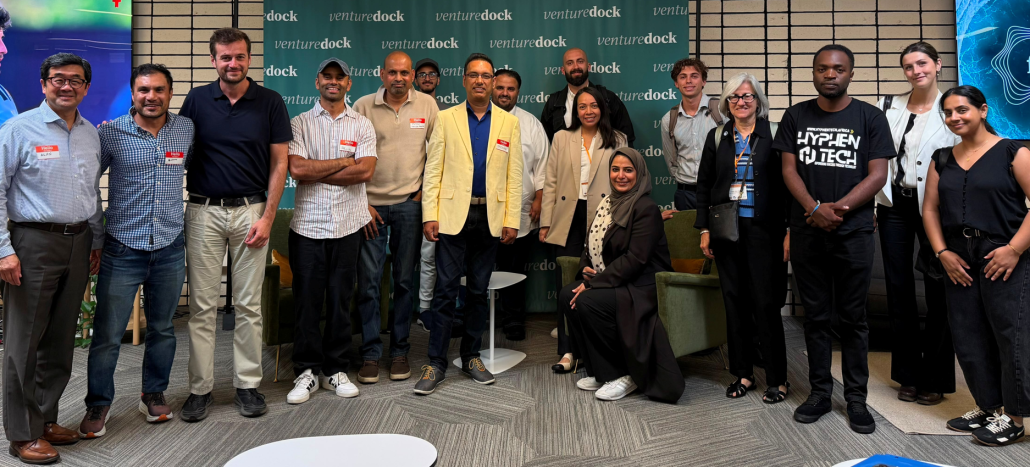
Offering an additional private sector perspective, the delegation met with leadership of One Concern, an AI company that develops predictive risk modeling solutions to help governments and businesses prepare for disasters and infrastructure disruptions. The discussion showcased how AI technologies are transforming cybersecurity, predictive planning, and entrepreneurship.
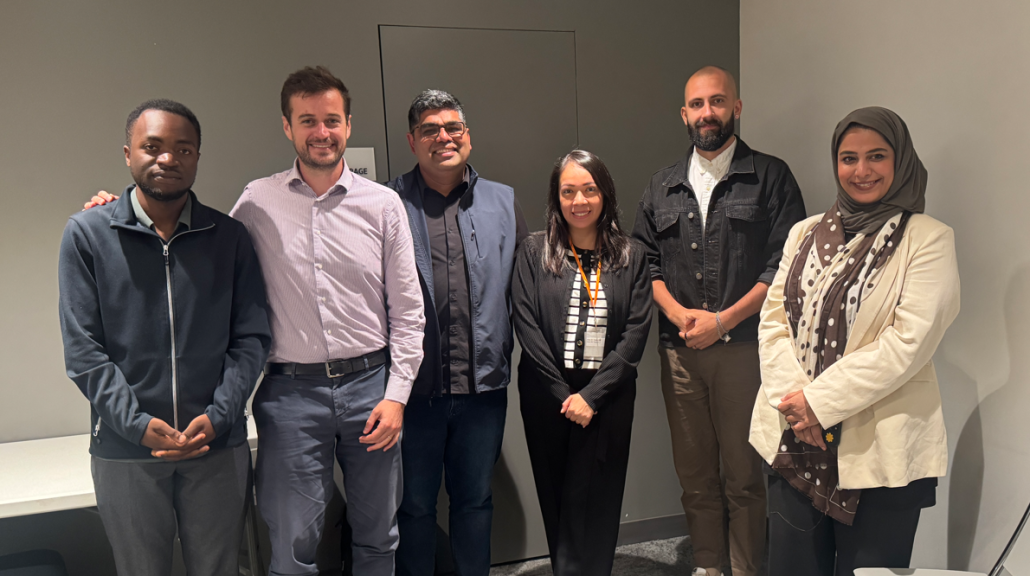
AI Workforce Development and Public Sector Innovation
The delegation met with the Government AI Coalition, a group of local, state, and federal government representatives united to promote responsible and purposeful AI in the public sector. Discussion centered on cross-sector collaboration and how government agencies can integrate AI to improve public services while maintaining human oversight and implementing policies that protect privacy, promote transparency, and strengthen public trust.
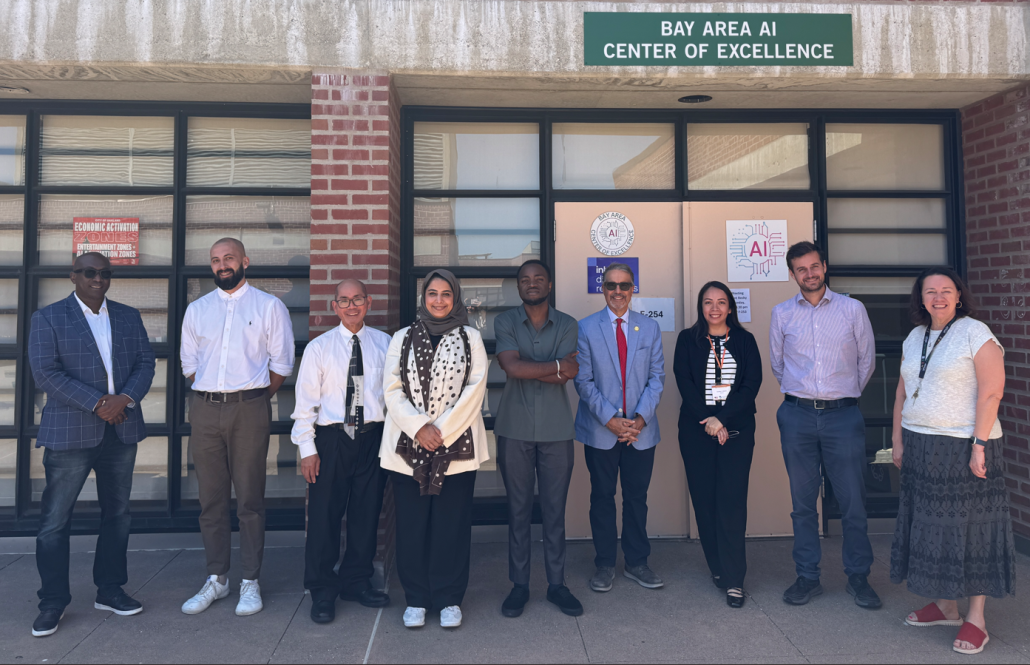
At Laney College’s Bay Area Artificial Intelligence Center of Excellence (BAAICoE), the delegation explored applied AI skills development across the region. BAAICoE advances AI education and workforce development through innovative AI curriculum, technical training, and industry‑aligned learning experiences. The visit also featured a demonstration of Feather Robotics’ latest robotic platform, offering visitors a behind-the-scenes look at emerging physical AI technologies.
Looking Ahead: Building a Foundation for Trusted AI Systems
Throughout discussions on responsible AI, cybersecurity, innovation, and workforce development, a message consistently emerged: the future of AI will be shaped not only by technological breakthroughs but also by a continued focus on innovation balanced by effective governance, collaboration, and education.
By bringing together global and local professionals from government, industry, education, our program sparked meaningful dialogue, encouraged the exchange of critical perspectives, and fostered relationships that lay the groundwork for cooperation on the development and deployment of trusted AI systems. Global Ties San Francisco appreciates each organization and speaker who shared their time and expertise throughout the program.
Our most recent U.S. Department of State International Visitor Leadership Program (IVLP) delegation made their way to the San Francisco Bay Area in May 2025 as part of their Edward R. Murrow Program for Journalists: AI and Technology in Journalism exchange. This project brought together six European broadcast reporters, editors, journalists, and media executives united by a common pursuit: to better understand how AI and emerging technologies are reshaping journalistic practices.
Over five packed days in the San Francisco Bay Area, a media and tech innovation hub, the delegates engaged with academics, technologists, legal professionals, and media experts to explore how newsrooms across the world can adapt, innovate, and uphold core media values in an era of rapidly evolving technology. Our program showcased America’s leadership in artificial intelligence and technology for journalism, emphasizing how Silicon Valley innovations can strengthen reporting and public understanding.
Day 1: Exploring San Francisco’s History and Culture
The group kicked off their visit with a classic introduction to San Francisco, spending Sunday morning on a guided city tour led by The Platinum Concierge. From the iconic Golden Gate Bridge to the Palace of Fine Arts and the Painted Ladies, they experienced some of the city’s most celebrated landmarks.
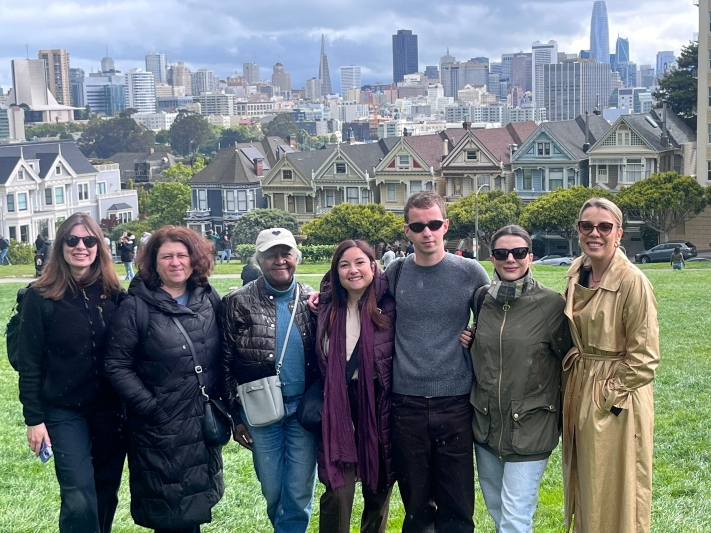
As they traveled through various neighborhoods, the contrast between soaring modern skyscrapers, historic architecture, lush parks, and rolling hills served as a foundation for the start of the professional program, tying in the history of the San Francisco with the current focus of modern innovation.
Day 2: From Universities and Tech Hubs to Veteran Journalists and America’s Pastime
Santa Clara University – Markkula Center for Applied Ethics
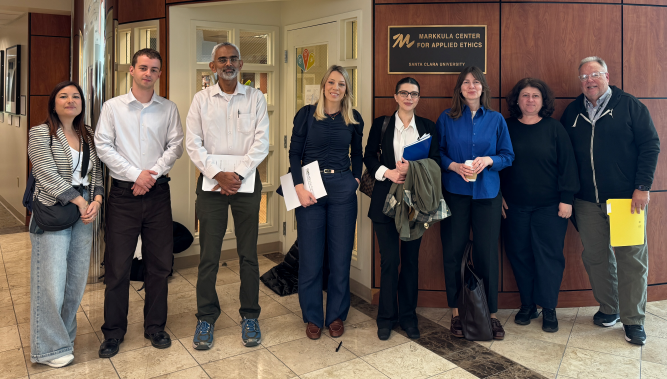
Monday morning opened with a trip south to Silicon Valley, visiting Santa Clara University’s Markkula Center for Applied Ethics. This collaborative initiative brings together journalists, media professionals, technologists, and scholars to develop practical frameworks that guide responsible decision-making in the creation and distribution of news. The visitors explored efforts to equip media professionals to navigate complex editorial decisions while strengthening public credibility, with a dual focus on maintaining integrity in reporting and adapting standards to emerging digital and AI-driven technologies.
From this conversation, an interesting discovery arose on how journalists utilize AI: mostly to transcribe, analyze data, and edit articles. The delegates also brought their own expertise to the table, tying in the questions of AI and trustworthy journalism from their respective countries.
Perplexity AI
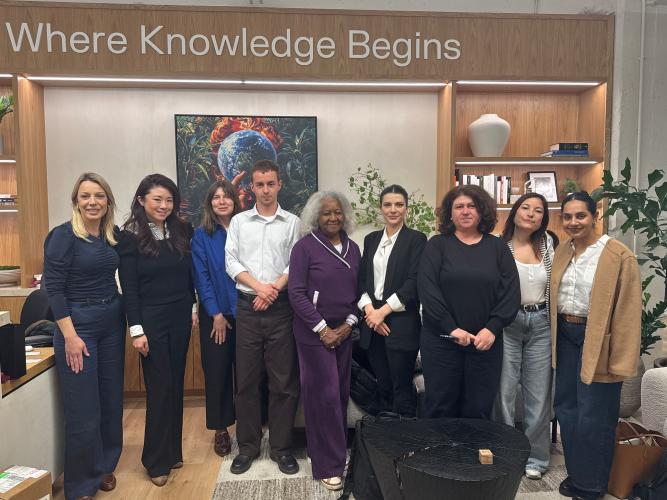
After enjoying lunch and exploring the local vendors and quaint shops at the Ferry Building in San Francisco, the group headed to Perplexity, an AI-powered search and research platform that has emerged as one of Silicon Valley’s most talked about startups. A representative walked visitors through Perplexity’s large language model- and generative AI-based answer engine, emphasizing its focus on credibility and source citations for verifiable results.
The company’s approach to accuracy, transparency, and user trust resonated with the delegates’ priorities in their own newsrooms. For journalists and media experts grappling with how AI is changing research and information dissemination, the discussion offered fresh perspective into how tech companies can take a responsible approach toward their impact on public understanding.
Butler Media
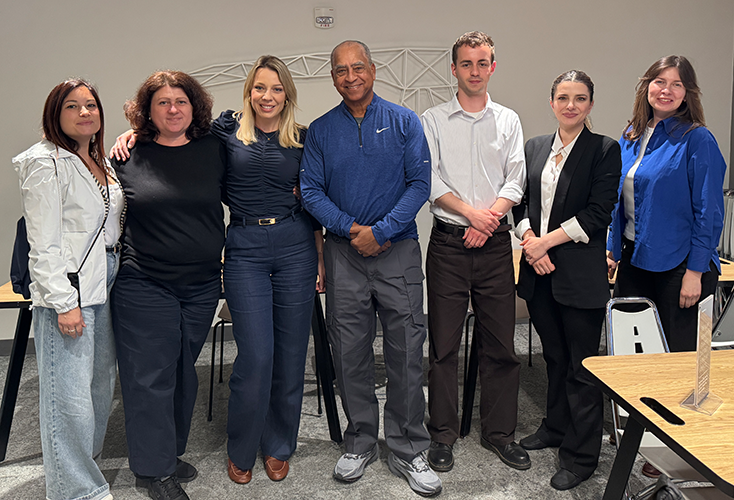
Rounding out the first full day of the program, the delegation met with Butler Media founded by a veteran broadcast journalist. Drawing on four decades of experience in radio and television, the speaker shared insights into the evolution of broadcast journalism from the birth of the internet to the latest developments in AI; the intersection of traditional and digital media; and what it takes to maintain editorial integrity and audience trust in a time of information overload. Veteran practitioner perspectives gave the visitors a grounded, human-centered focus to complement previous tech-revolved conversations.
The Last Inning of the Day at Oracle Park
After a productive day of meetings, the group was excited to get a taste of America’s favorite pastime and headed to Oracle Park for the San Francisco Giants baseball game against the San Diego Padres. As part of a true cultural experience, the group took note of how engrained baseball is in American civic and cultural life with ties to community and tradition. A win for the San Francisco Giants was a perfect way to end the night!
Day 3: Final Professional Meetings on American Institutions and Values
Stanford University – Hoover Institution’s Center for Revitalizing American Institutions
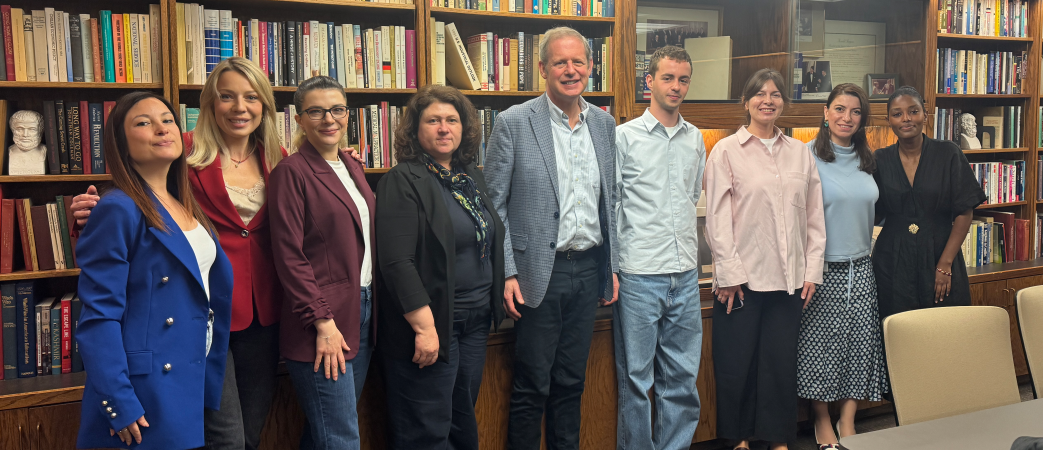
Tuesday took the group down to the beautiful Stanford University campus for a meeting at the Hoover Institution’s Center for Revitalizing American Institutions (RAI), a public policy think tank promoting the principles of individual, economic, and political freedom. The group met with representatives whose work focuses on rebuilding trust in American Institutions, AI governance, technology policy, and First Amendment law.
Conversation centered on the critical role that media, journalism, and free expression play in democratic societies and on public discourse, with a focus on issues related to emerging technologies. Coming from different cultural contexts, the delegates provided unique and varied perspectives into the pressures they face when it comes to media practices and changing technology. This created an exchange that was both intellectually driven and personal, leaving a meaningful impact on everyone in the room.
First Amendment Coalition (FAC)
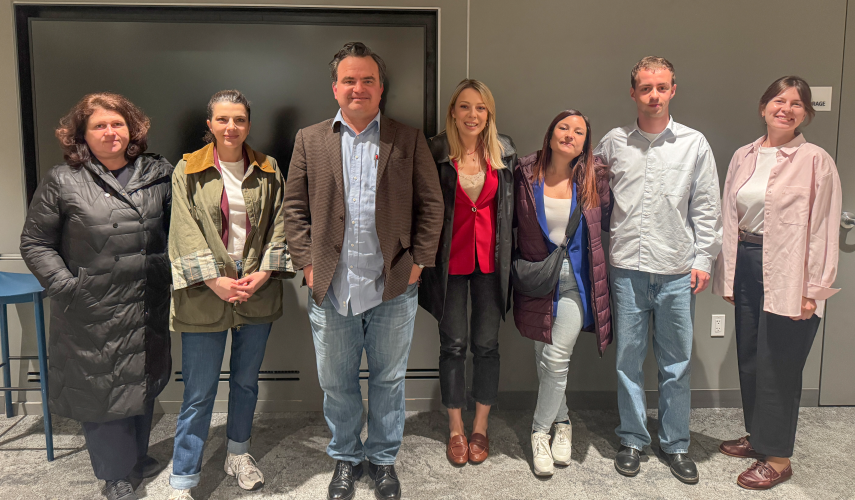
The group’s last stop brought them back to San Francisco for a meeting with the First Amendment Coalition (FAC), a nonprofit public interest organization dedicated to upholding First Amendment values. Discussion led by a journalist-turned-lawyer centered on FAC’s work challenging press restrictions and serving as a legal resource for journalists and everyday citizens.
The conversation highlighted how legal frameworks and nonprofit organizations work together to support the conditions that make quality journalism possible. As this final meeting came to an end, the delegates reflected that although legal regulations may differ across countries, journalists worldwide recognize the importance of transparency and expression in strengthening democracy.
Leaving San Francisco with a Shared Conviction
From the challenges and opportunities of AI-assisted content to the legal frameworks upholding democratic values, this delegation covered some of the most pressing questions facing journalism today. Across the wide range of topics discussed, a common theme emerged: the need for commitments to accuracy and media integrity to keep pace with the rapid development of technologies that are reshaping how news is produced, discovered, and consumed.
The delegates returned home not only with new information and contacts, but also with a renewed sense of connection to the global community of journalists working to uphold these principles.
Global Ties San Francisco is grateful to all the local experts who shared their time, knowledge, and perspectives, and we look forward to seeing the connections forged this week grow into lasting professional bonds.
Author: Sarina Qureshi
From September 23-27, 2025, Global Ties San Francisco hosted nine senior government officials, policy advisors, researchers, and cybersecurity leaders from Germany and Sweden for a U.S. Department of State International Visitor Leadership Program (IVLP) project on artificial intelligence (AI) policy, innovation and security.
Throughout the program, the participants and their U.S. interlocutors were united by expertise in AI and digital governance, cybersecurity, and the responsible use of data and emerging technologies to strengthen democratic institutions, public sector innovation, and resilience against malign influence. Building on this shared foundation, the program strengthened transatlantic collaboration on a responsible and innovative AI ecosystem by examining U.S. approaches to innovation and risk-based regulation and aligning strategies for secure digital infrastructure.
Starting in Washington, DC, the group traveled to Minneapolis, Phoenix, and Sacramento, engaging with local leaders and innovators to examine how these issues vary across the nation. The program concluded in the San Francisco Bay Area, the world’s premier hub for innovation, where participants focused on the region’s startup ecosystem and its role in advancing next-generation AI systems. Our local city stop also highlighted the development of sustainable and ethical AI models, human-centered design practices, and strategies for fostering economic growth through early-stage investment.
Key Conversations
World Economic Forum – Centre for the Fourth Industrial Revolution (C4IR)
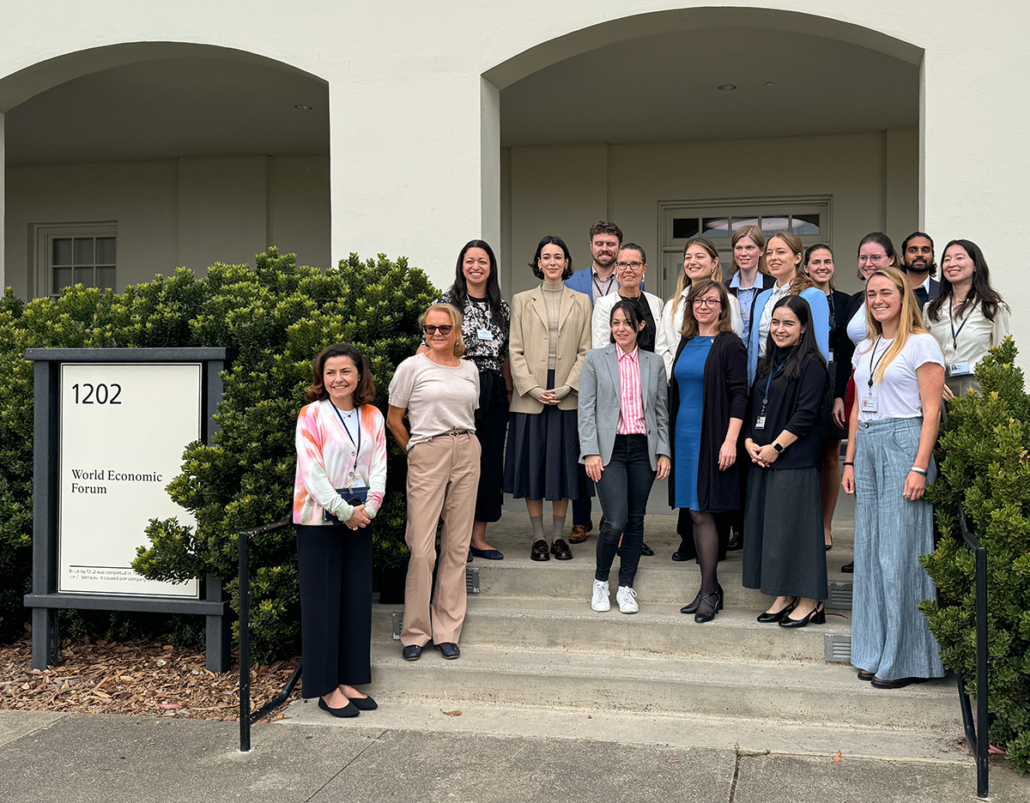
Under the fog-shrouded Golden Gate Bridge, the group met with the World Economic Forum’s (WEF) Centre for the Fourth Industrial Revolution (C4IR), a platform for “multistakeholder dialogue and concrete cooperation on governance challenges and opportunities presented by advanced technologies.” Here, WEF stays closely connected to the Bay Area’s influential ecosystem of startups, investors, and tech giants that steer the global economy’s most important innovations and decisions. Meeting with AI and data governance leaders, the visitors examined how C4IR advances public-private cooperation on emerging technologies such as the Internet of Things (IoT), AI, and blockchain, with a focus on developing policy frameworks that enable responsible and widespread use. They outlined key WEF initiatives such as those focused on AI agents and AGI, offering insights the visitors could bring back with them from a region that has long set the pace in cutting-edge technology.
Plug and Play Tech Center
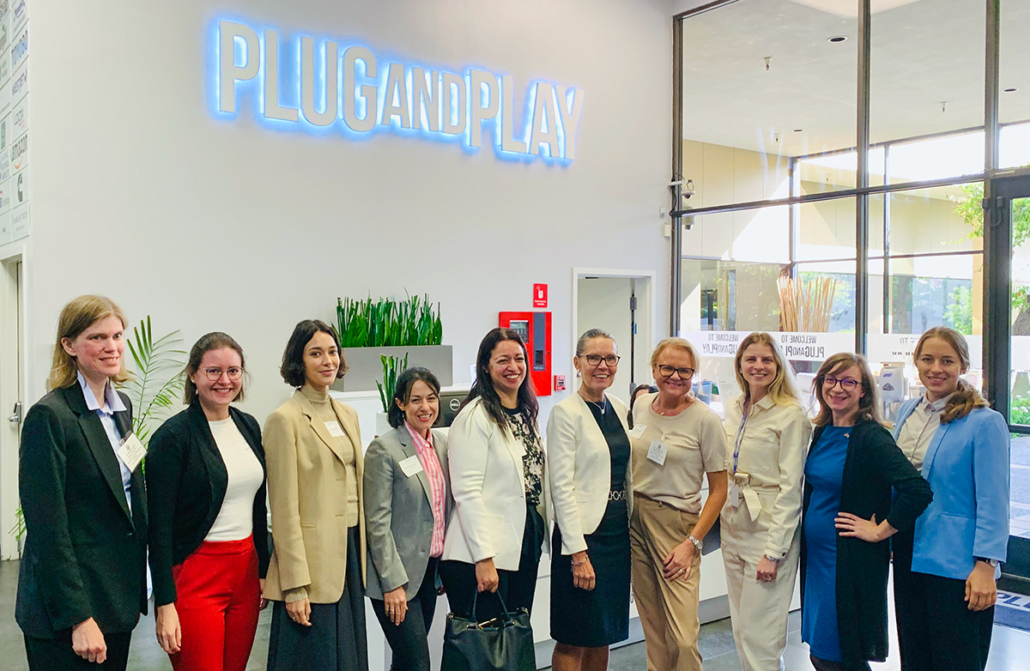
At the entrance to Plug and Play Tech Center, a large Persian carpet — a nod to the founders’ beginnings — set the stage for the group’s second meeting of the day. The delegation toured the tech center, examining its origin story and mission as a leading Silicon Valley startup accelerator and corporate innovation platform that connects tech-focused startups with global corporations, investors, and public sector partners. The visitors also met with enterprise and AI ventures leaders to discuss the dynamics of the Silicon Valley startup landscape, and how Plug and Play helps startups scale by facilitating strategic connections, mentorship, and investment. The conversation touched on access to venture capital, mentorship networks, and the key factors that influence startup growth in one of the world’s most competitive markets.
Stanford University – Institute for Human-Centered Artificial Intelligence (HAI)
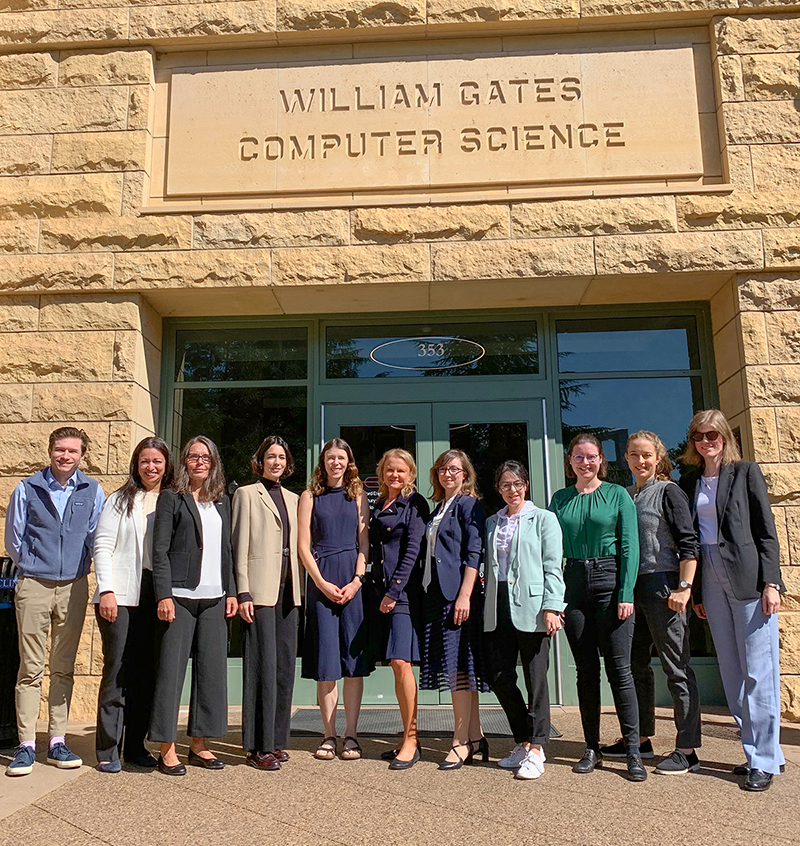
The delegation started the next morning at Stanford University’s Institute for Human-Centered Artificial Intelligence (HAI), a global leader in interdisciplinary research focused on ensuring that AI is developed and used in ways that benefit humanity. Grounded in the belief that AI should be collaborative, augmentative, and aligned with human values, HAI explores the societal impact of AI across three core areas: human impact, augment human capabilities, and intelligence. A discussion on HAI’s vision for the future allowed the visitors to examine how artificial intelligence interacts with individuals and key institutions, and to reflect on policy and governance strategies that support responsible and human-centered AI development.
500 Global
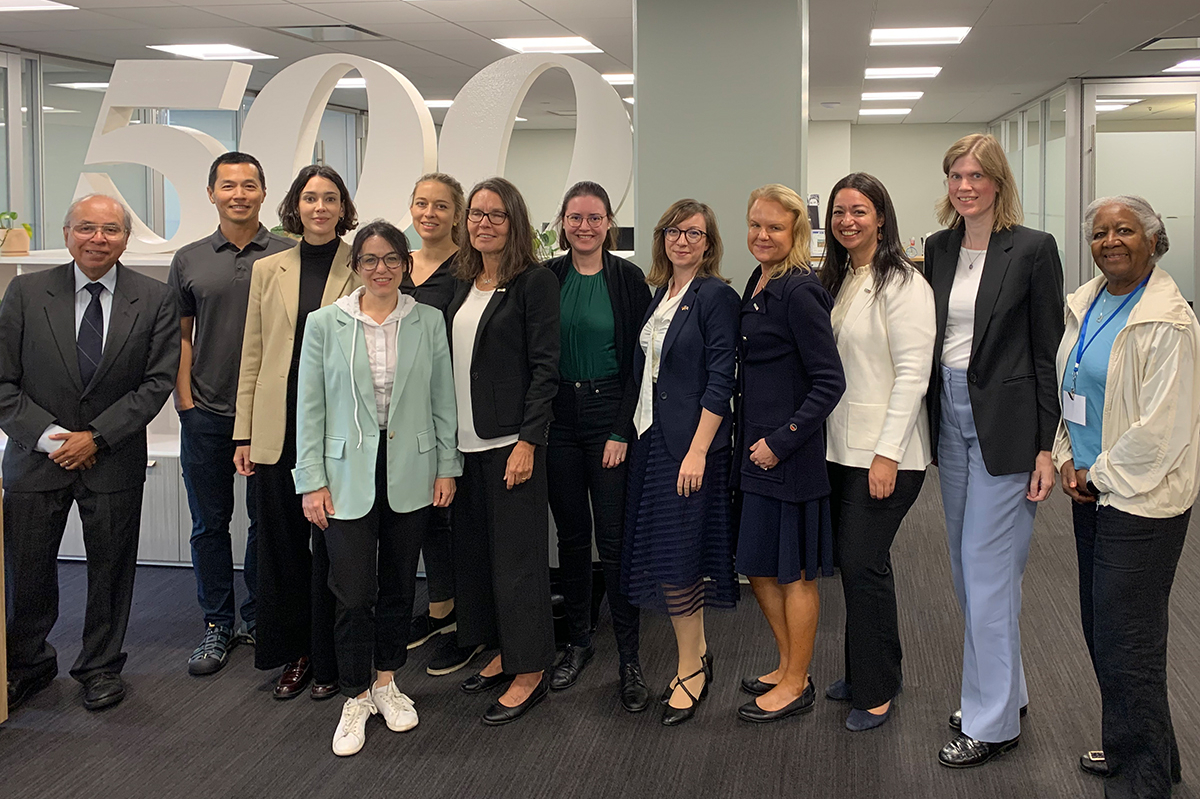
The group rounded out the Silicon Valley tour at 500 Global, which backs founders of high-growth technology companies around the world and helps startups scale. Here, discussion centered on how 500 Global cultivates startup ecosystems, drives AI-enabled innovation, and fosters cross-border collaboration among entrepreneurs, investors, and policymakers.
Tying it All Together: Facilitated Synthesis Session
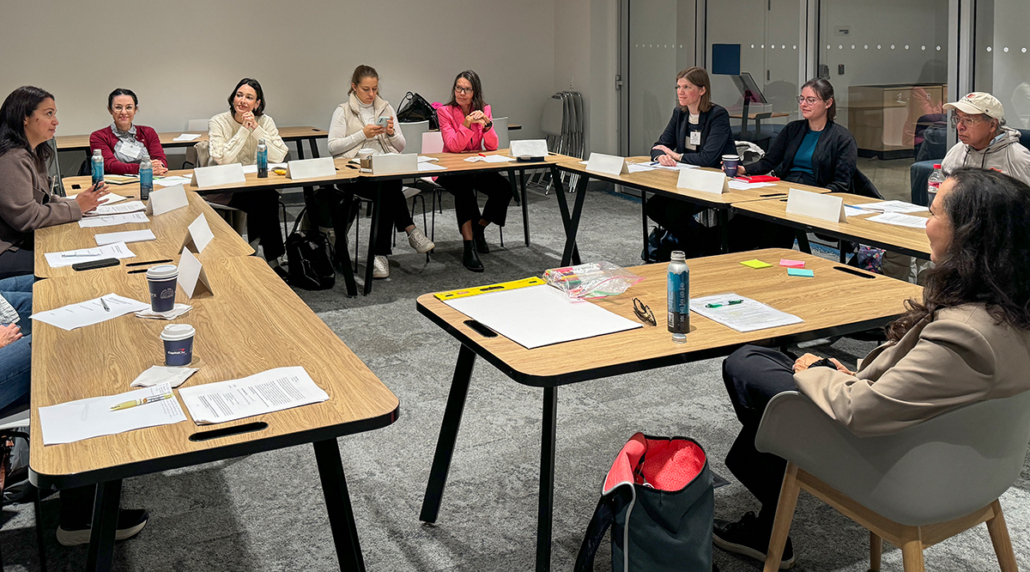
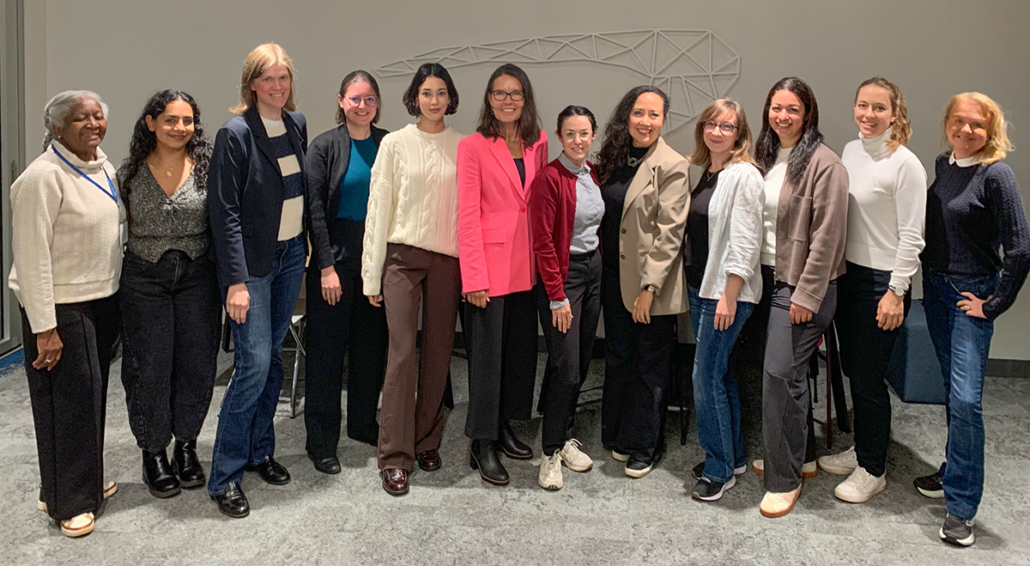
We also incorporated one of our signature offerings: a Reflection and Synthesis Session led by an award-winning commercial attorney, mediator, and facilitator, as well as a non-profit leader, entrepreneur, and change agent, with a strong focus on responsible AI. The session provided structured time for participants to reflect on their three-week IVLP experience, distill key insights, and map out concrete next steps.
Through facilitated exercises, the visitors identified and shared core takeaways from the project, explored how U.S. approaches and best practices could be adapted to their own professional contexts, and assessed related challenges and opportunities. The session concluded with dedicated time for participants to begin outlining actionable plans to implement upon their return home.
Exploring the Bay Area Beyond AI
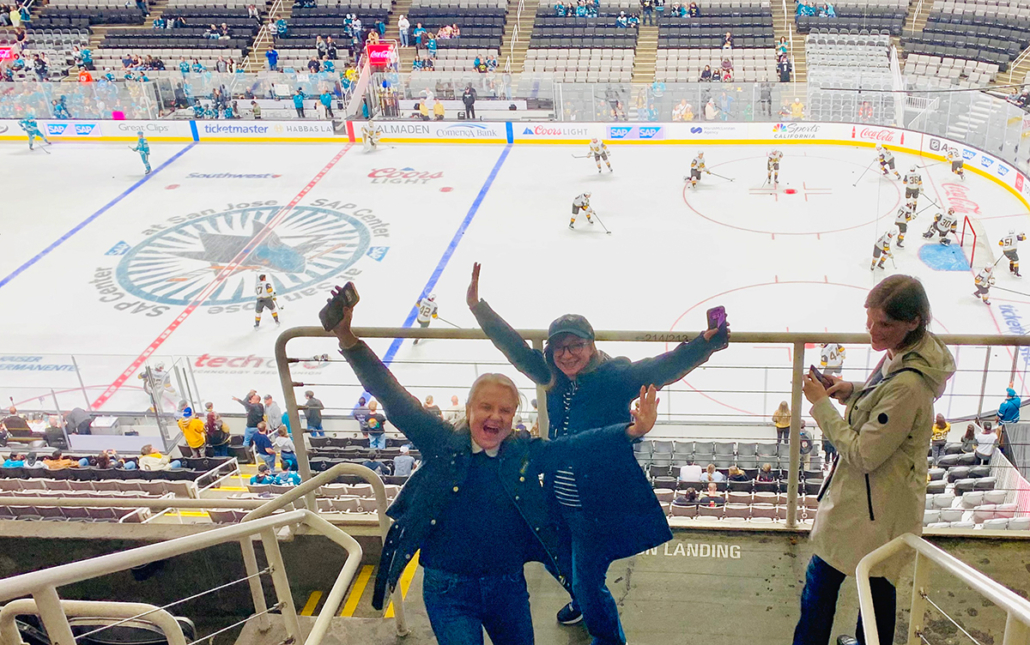
With days fluctuating between classic San Francisco fog and sunny afternoons with crystal-clear views of the Golden Gate Bridge, the visitors thoroughly enjoyed their free time. They explored Fisherman’s Wharf, took a Bay cruise, attended a hockey game, and had lunch in the charming waterfront town of Sausalito.


Final Reflections
By demonstrating the U.S. approach toward innovation and AI legislation, this project sought to leverage AI’s promise in both Germany and the United States while also addressing possible dangers. In reflecting on their journey, delegates recognized that each encounter revealed not just how the U.S. leads in innovation, but how that leadership thrives through openness, collaboration, and the courage to experiment. The experience inspired them to translate those lessons into their own national contexts, strengthening transatlantic ties, and shaping a more connected, human-centered approach to AI and technology.
Authors: Giovanna Basso & Alannah Crandall
International Visitor Leadership Program (IVLP)
- Approaches to Urban Search and Rescue in the United States | Republic of Türkiye (4 visitors) – January 23-28
- Global Government-to-Government Partnership (G3P): R.T. | Japan (1 visitor) – February 12-18
- Rural Economic Opportunity Through Binational Tourism | Japan (7 visitors) – March 25-29
- Media Management | Fiji (8 visitors) – April 12-16
Visual Arts for Community Impact | Multi-Regional Project (26 visitors) – April 15-19(CANCELED) - Disaster Preparedness and Emergency Management | Morocco (6 visitors) – April 17-20
- Trafficking in Persons: Prevention and Mitigation I | Multi-Regional Project (22 visitors) – April 30 – May 3
- Disaster Preparedness and Emergency Management | Multi-Regional Project (24 visitors) – May 8-14
- Emergency Preparedness and Crisis Response | Taiwan (9 visitors) – May 10-14
- Religious Freedom Enhanced by Interfaith Understanding | Kazakhstan (6 visitors) – May 17-22
- Promoting Strategic Artificial Intelligence Engagement | Kazakhstan (6 visitors) – June 14-18
- Foreign Policy, Economic Security, and China | Eurasia (25 visitors) – June 19-25
- Tackling Waterborne and Vector-borne Diseases to Strengthen Health Sector Resilience | Africa (9 visitors) – June 24
- Combating Coercive Violence II | Africa (8 visitors) – June 27-29
- Community-based Models for Addressing Mental Health Challenges | Poland (9 visitors) – July 9-13
- Cybersecurity in Critical Telecom Infrastructure | Türkiye (6 visitors) – July 18-23
- Community Engagement in the Political Process | Switzerland (6 visitors) – July 19-24
- Energy Security | Israel (6 visitors) – July 23-28 (RESCHEDULED FROM FEBRUARY)
- The Role of Think Tanks in Public Policy | Kazakhstan (7 visitors) – July 26
- Advanced Battery Chemistries | India (5 visitors) – July 30 – August 2
- Economic Development and the Bioeconomy | Multi-Regional (7 visitors) – July 31 – August 2
- Women in Politics and Civil Society | Multi-Regional Project (6 visitors) – August 23
- Partnering on a Quantum Future | Slovenia (12 visitors) – August 27-30
- U.S. Innovation in Water Resource Management | Pakistan (10 visitors) – September 1
- Project Management and Strategic Communications | Association of Southeast Asian Nations (ASEAN) Secretariat (9 visitors) – September 6-9
- Media Innovation for Telugu Media Professionals | India (4 visitors) – September 12-13
- Performing Arts and Cultural Centers in the United States | The People’s Republic of China (11 visitors) – September 20
- Artificial Intelligence: Policy, Innovation, and Security | Germany & Sweden (10 visitors) – September 23-27
- Combating Money Laundering and Recovering Stolen Assets | Kazakhstan (6 visitors) – September 25-30
- ASEAN: Maritime Policy and Security Coordination in the South China Sea | East Asia and Pacific (9 visitors) – September 30 – October 4 (RESCHEDULED FROM JULY)
- Advancing Digital Security and Development – ASEAN/Quad | Inter-Regional Project (12 visitors) – October 4-8
- Law Enforcement Approaches to Countering CCP Influence | Italy (8 visitors) – October 8-12
- Energy as an Economic Driver | Multi-Regional (16 visitors) – October 15-18 (RESCHEDULED FROM MARCH)
- Research Security and Innovation | Portugal & Spain (11 visitors) – October 22-25
- Strategies for Stability and Economic Resilience | Western Hemisphere (9 visitors) – October 24-25
Strategies to Counter Terrorism | Europe (10 visitors) – October 31 – November 1(CANCELED)Edward R. Murrow Program for Journalists: Investigative Reporting | Africa (15 visitors) – November 1-5(CANCELED)- Advancing U.S.-Philippine Relations for American Semiconductor Supply Chains | Philippines (10 visitors) – November 2-5
Technology Innovators: Artificial Intelligence – Harnessing the Power of Technology | Multi-Regional (24 visitors) – November 4-8(CANCELED)- Biotech Investment and Trade in the United States | France (4 visitors) – December 3-7
- Advancing Science-based U.S.-Thailand Trade Cooperation | Thailand (5 visitors) – December 10-12
- Mega Sporting Events and Economic Prosperity III | Multi-Regional (22 visitors) – December 11-16
- Australia, Brazil, Bulgaria, Czech Republic, Estonia, Germany, Greece, Guatemala, Japan, New Zealand, Norway, Palau, Samoa, Saudi Arabia, Senegal, Serbia, Tanzania, Trinidad and Tobago, United Kingdom, Uruguay, Zimbabwe
- Global Government-to-Government Partnership (G3P): K.N. | Japan (1 visitor) – December 13-17
- Global Government-to-Government Partnership (G3P): Y.Y. | Japan (1 visitor) – December 13-17
- Promoting Cybersecurity | Western Hemisphere (12 visitors) – December 16-20
- Argentina, Brazil, Chile, Costa Rica, Guatemala, Mexico, Paraguay, Uruguay
- Best Practices in Foreign Investment Screening | Japan & Korea (8 visitors) – December 17-20 (RESCHEDULED FROM NOVEMBER)
Custom Fee-For-Service
- Tackling Cybercrimes – A Key to Modern Trade International Exchange and Leadership Program (IELP) | Pakistan (8 participants) – February 13-19
- Friends, Partners, and Allies Program for Journalists | Japan, Philippines (10 participants) – June 4-10
- Road to 250 – A Program for Filipino Creators | Philippines (4 participants) – November 12-15
Interested in serving as a Professional Resource or Home Hospitality host for our international visitors?
Final Update: November 18, 2025
On July 31, 2025, Global Ties San Francisco hosted a free community social hour and networking event with meaningful conversations over delicious food!
Join Global Ties San Francisco and our international guests on July 31st for a free community social hour and networking event with meaningful conversations over delicious food!
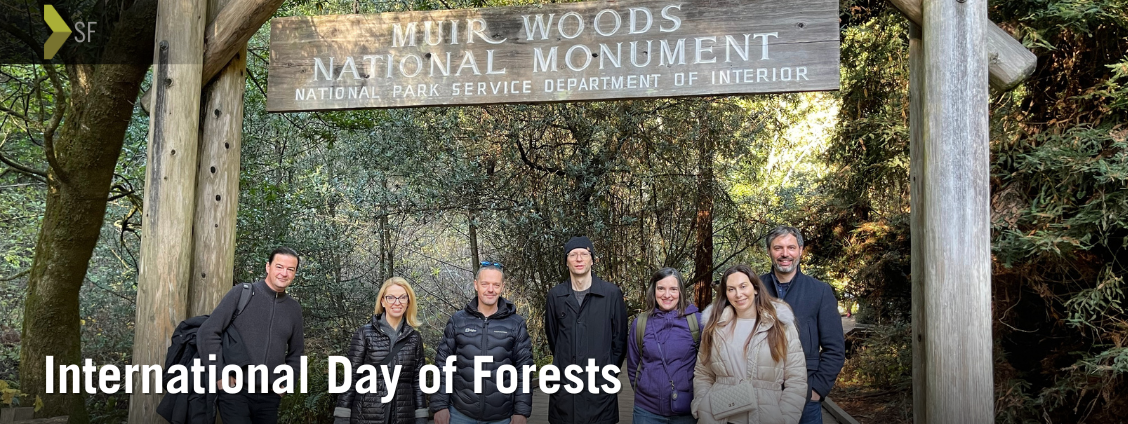
The United Nations International Day of Forests is recognized on the 21st of March to raise awareness of the importance of all types of forests. The 2025 theme, Forests and Foods, highlights the vital role of forests in food security, nutrition, and livelihoods. Beyond providing sustenance and income, forests support ecosystems, protect water and soil, and offer habitats for biodiversity, among other benefits.
Here in the San Francisco Bay Area, Muir Woods National Monument — proclaimed a National Monument in 1908 to protect and preserve the land — is one of the last remaining forested areas of coast Redwood trees. These giant evergreens can stand up to 79 meters tall and average between 600 and 800 years old, with the oldest being at least 1,200 years old. The park is home to 380 different plants and animals, ranging from bats that find refuge in tree cavities to Coho salmon and steelhead trout that swim in the clear waters of Redwood Creek.
Known for its towering stand of old-growth coast Redwood trees, Muir Woods attracts visitors from all over the world to experience this unique breathtaking ecosystem. Beyond its natural beauty, Muir Woods is also a site of profound historical significance, where nature, diplomacy, and the pursuit of peace intersect.
Did you know San Francisco is the birthplace of the United Nations, and Muir Woods played a symbolic role in its founding?
During a pivotal time in history, as World War II neared its end, world leaders convened in San Francisco for the United Nations Conference on International Organization (UNCIO) from April 25 to June 26, 1945, to draft and sign the UN Charter. Relatively equidistant between Asia, Europe, and Latin America, picturesque San Francisco was well positioned for a global gathering.
As preparations for the San Francisco Conference were underway, it was proposed that the delegates visit the serenity of Muir Woods to reflect in “a ‘temple of peace’ [where] the delegates would gain a perspective and sense of time that could be obtained nowhere in America better than in a forest.” U.S. Secretary of the Interior Harold Ickes described Muir Woods as a natural cathedral, where trees older than the Magna Carta stood as enduring witnesses to history.
When U.S. President Franklin Delano Roosevelt — who had championed the creation of a new international system to maintain peace — passed away two weeks before the conference began, the retreat to Muir Woods took on additional significance.
In tribute to his legacy, over 500 delegates from 46 nations gathered in Muir Woods Cathedral Grove on May 19, 1945, to honor the late president and reaffirm their commitment to building a more peaceful world. This commemoration cemented Muir Woods’ place in global history, making it not only a site of natural wonder but also a symbol of international cooperation, diplomacy, and the enduring pursuit of peace.
Today, as we celebrate the UN International Day of Forests, we are reminded that forests are even more than ecological treasures — they are also places of inspiration and unity, where people from different nations come together, as they did in 1945, to contemplate a shared future.
Through our work with the U.S. Department of State’s International Visitor Leadership Program (IVLP) and other custom exchanges, Global Ties San Francisco continues this tradition by bringing international visitors to experience the majesty of Muir Woods. In doing so, we reinforce San Francisco’s role as a center for global engagement, fostering the same spirit of global exchange and mutual understanding that underlined the founding of the United Nations nearly 80 years ago.
#ForestDay
Author: Song Held
Editor: Alannah Crandall